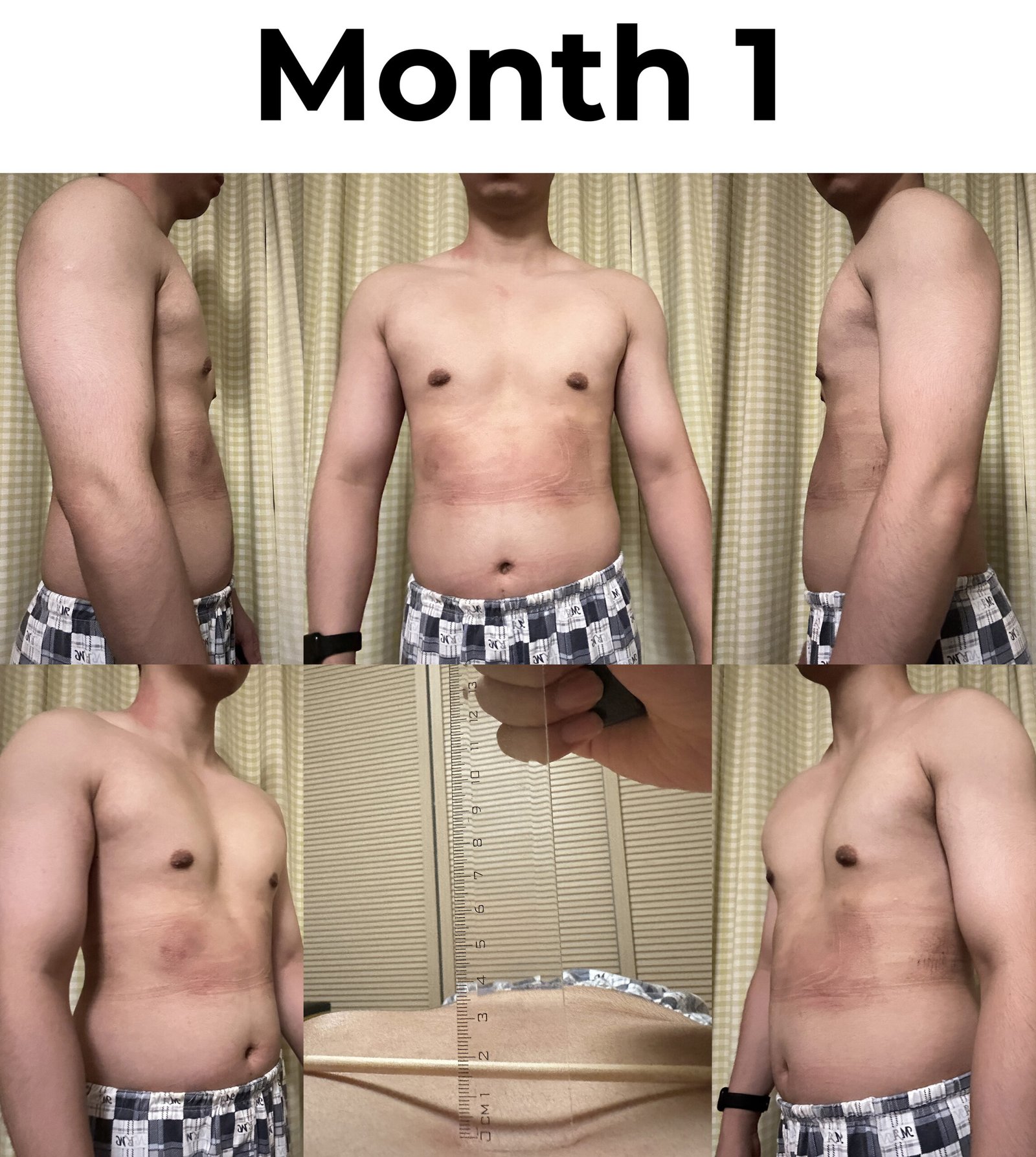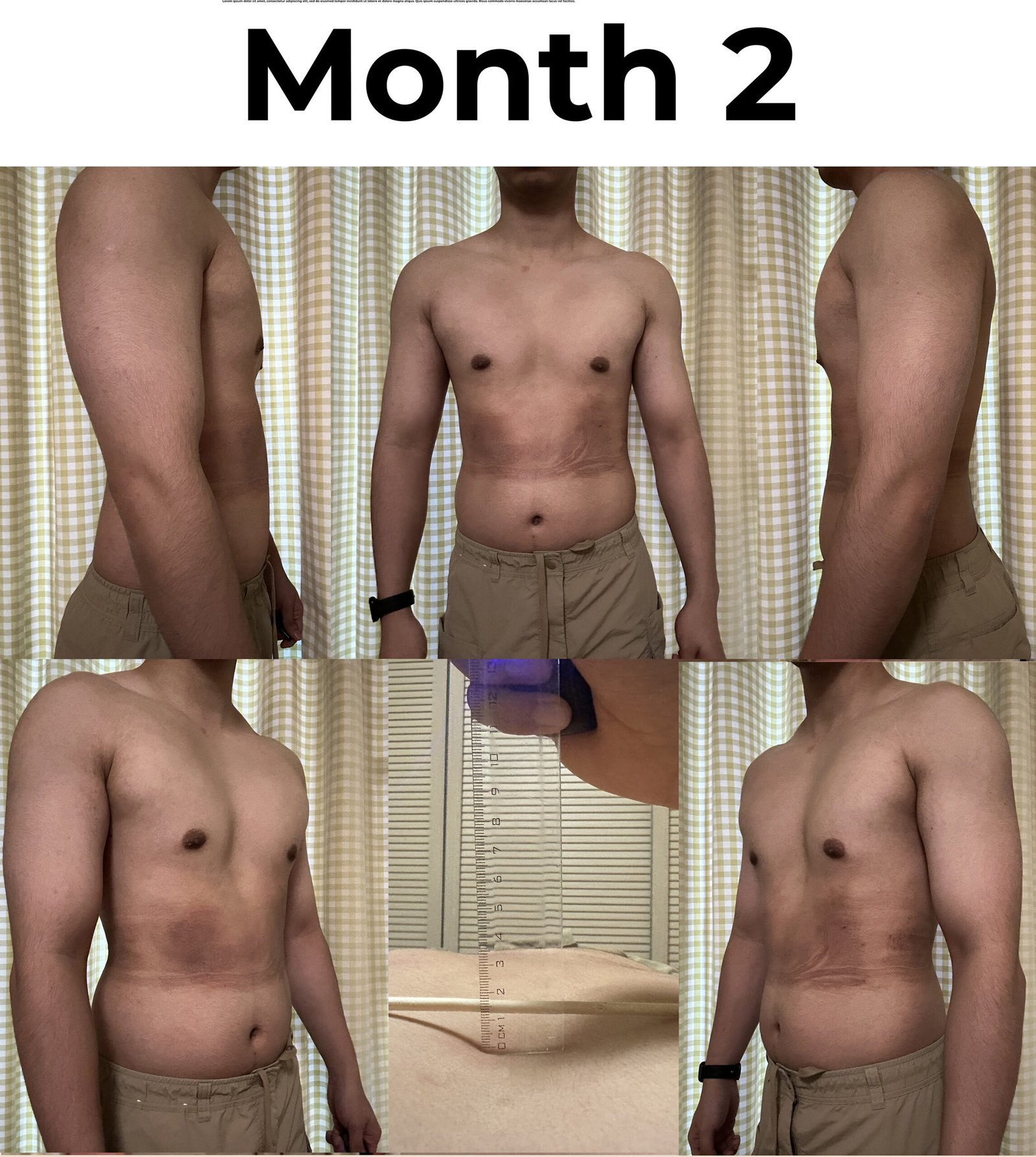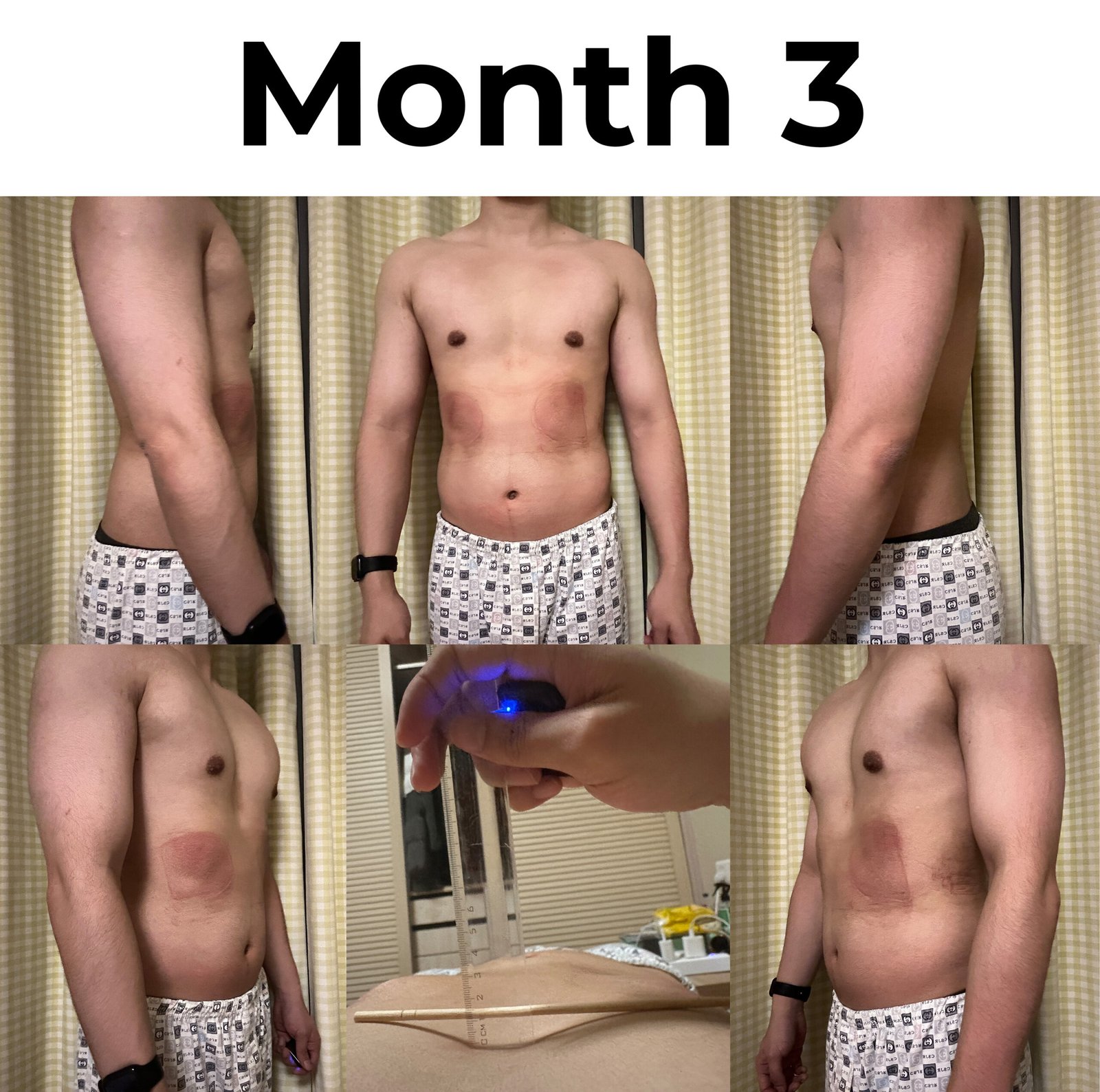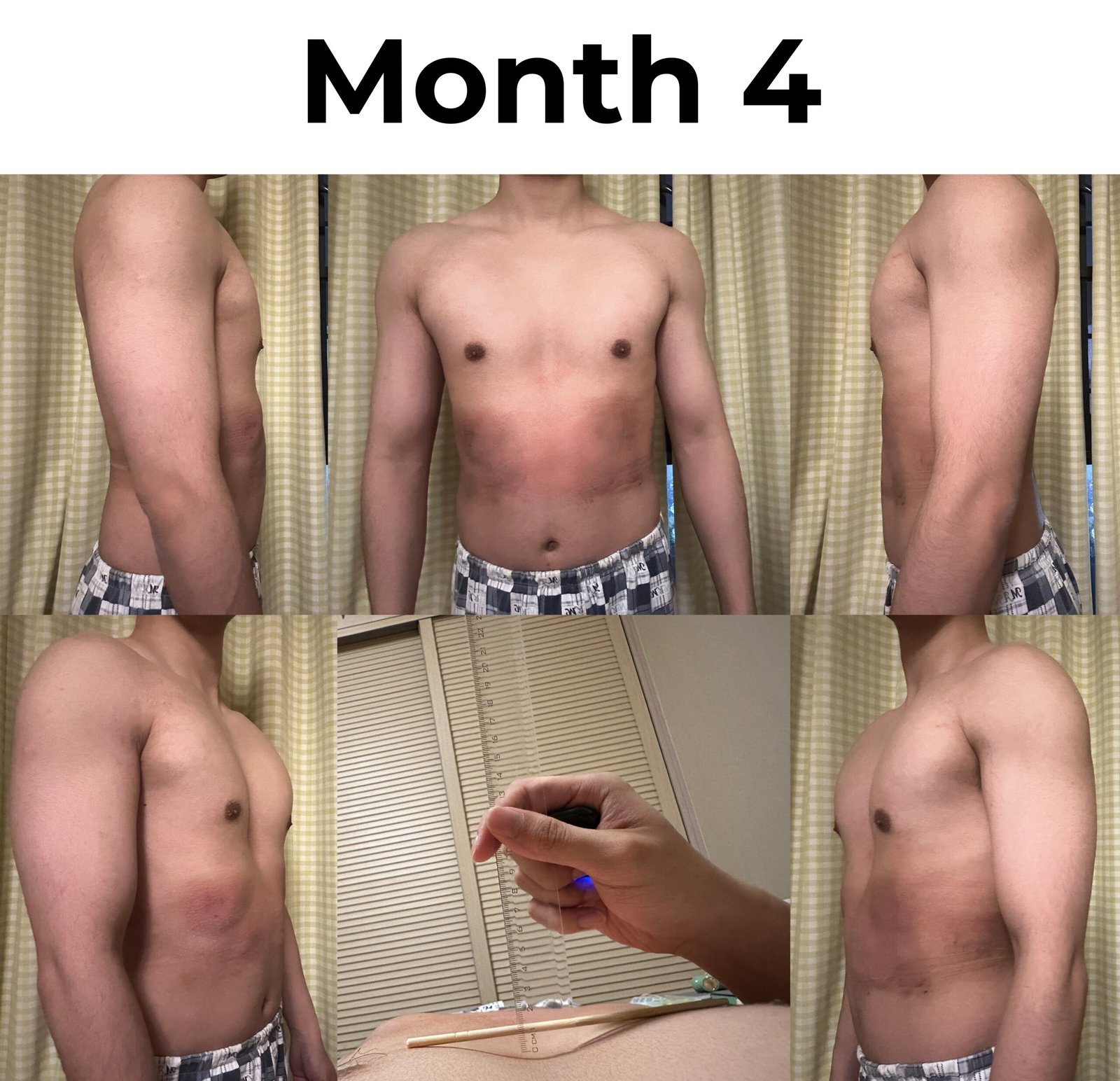

Mr. J. — 36-Year-Old Client with Severe Asymmetric Pectus Excavatum (33 mm Indentation)
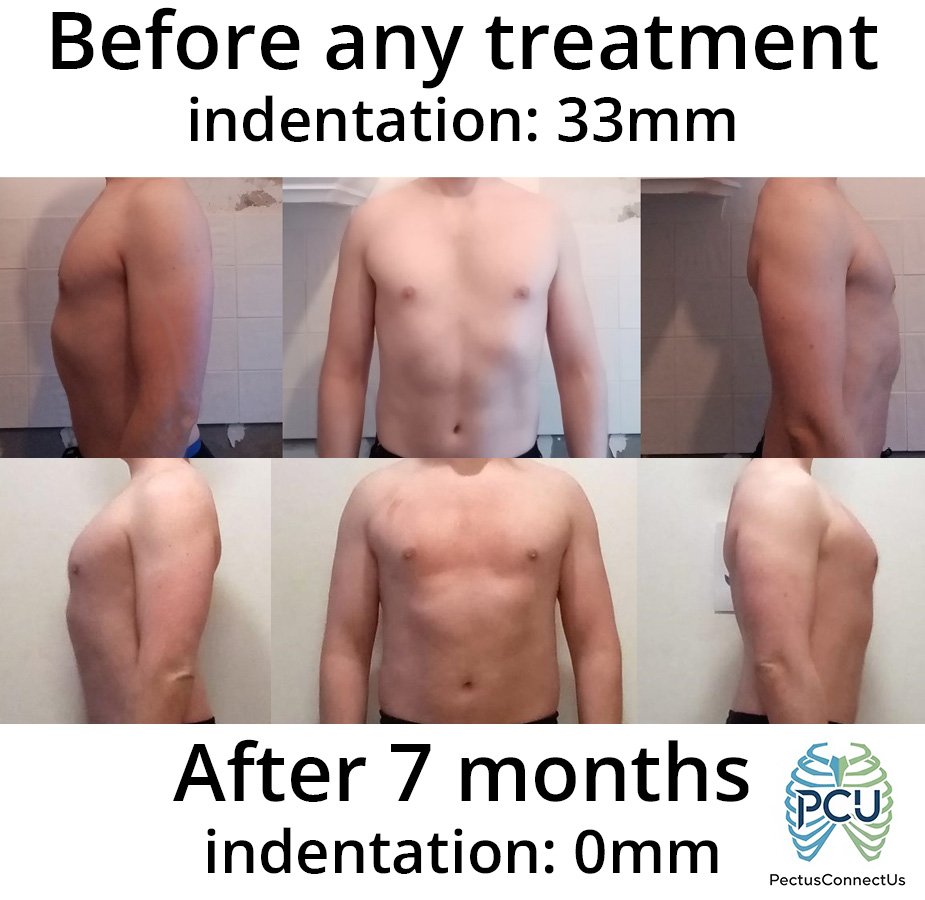
Mr. J was my very first client. He reached out to me in early 2023, and we began his treatment in May of that year.
He used a soft brace, a hard brace, and a vacuum bell. His feedback and experiences were invaluable—they helped me refine the devices into the effective form they have today.
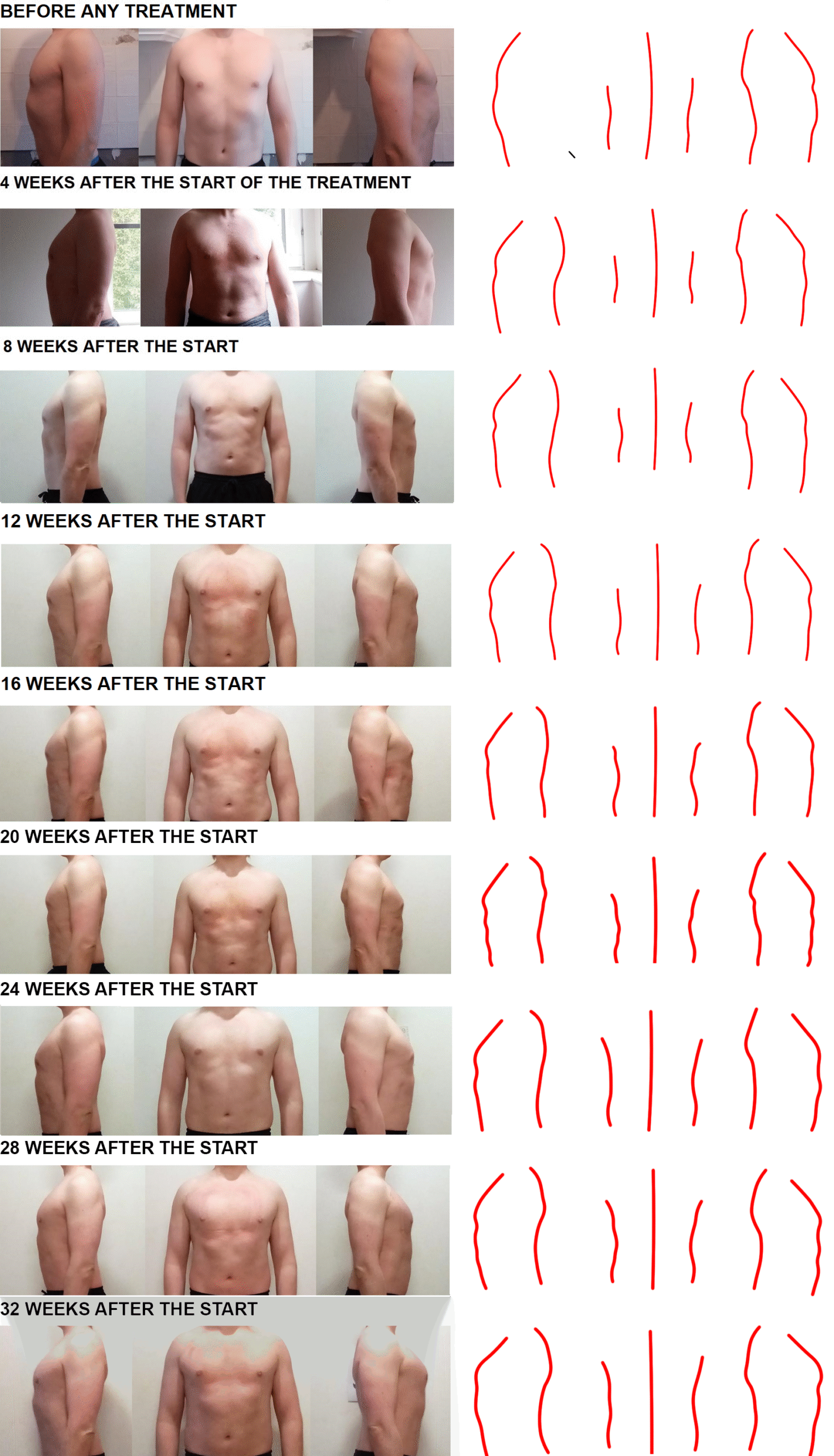
Month by month, his chest improved. He was fully committed: wearing the braces for more than 22 hours a day and consistently following the training plan.
In just seven months, his 33 mm chest indentation completely corrected, along with his thoraco-lumbar scoliosis.
Since completing treatment, he has no longer needed the braces or vacuum bell. Neither his chest nor spinal deformity has returned. He overcame both—once and for all.
But more importantly, he also addressed the root causes behind them. Through the training, breathing work, and lifestyle changes, he overcame not only the visible deformities but also the underlying muscular imbalances, restricted breathing patterns, and postural issues that had contributed to his condition.
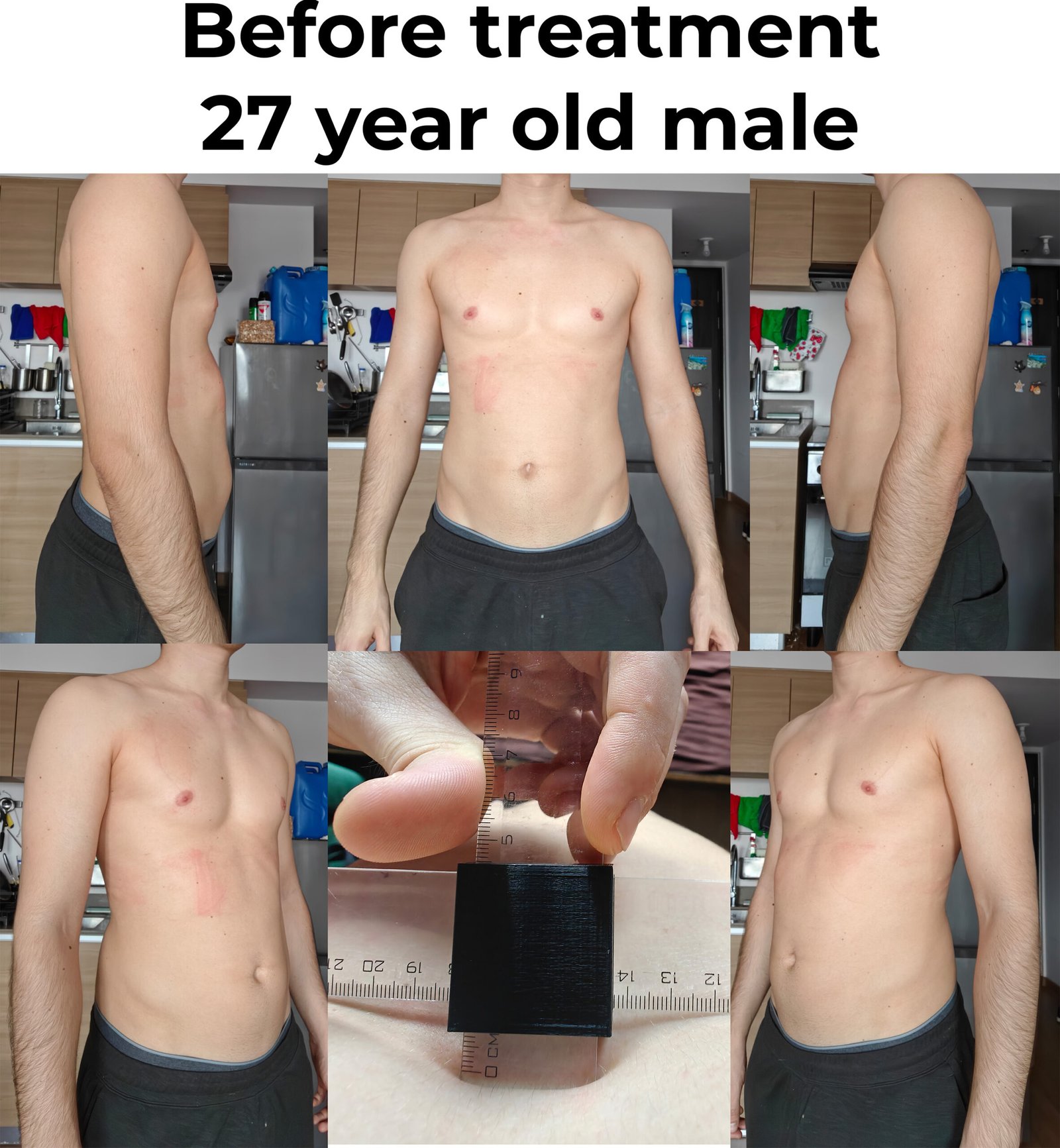
Mr. Ju. — 27-Year-Old Client with Mild Pectus Excavatum (8 mm Indentation)
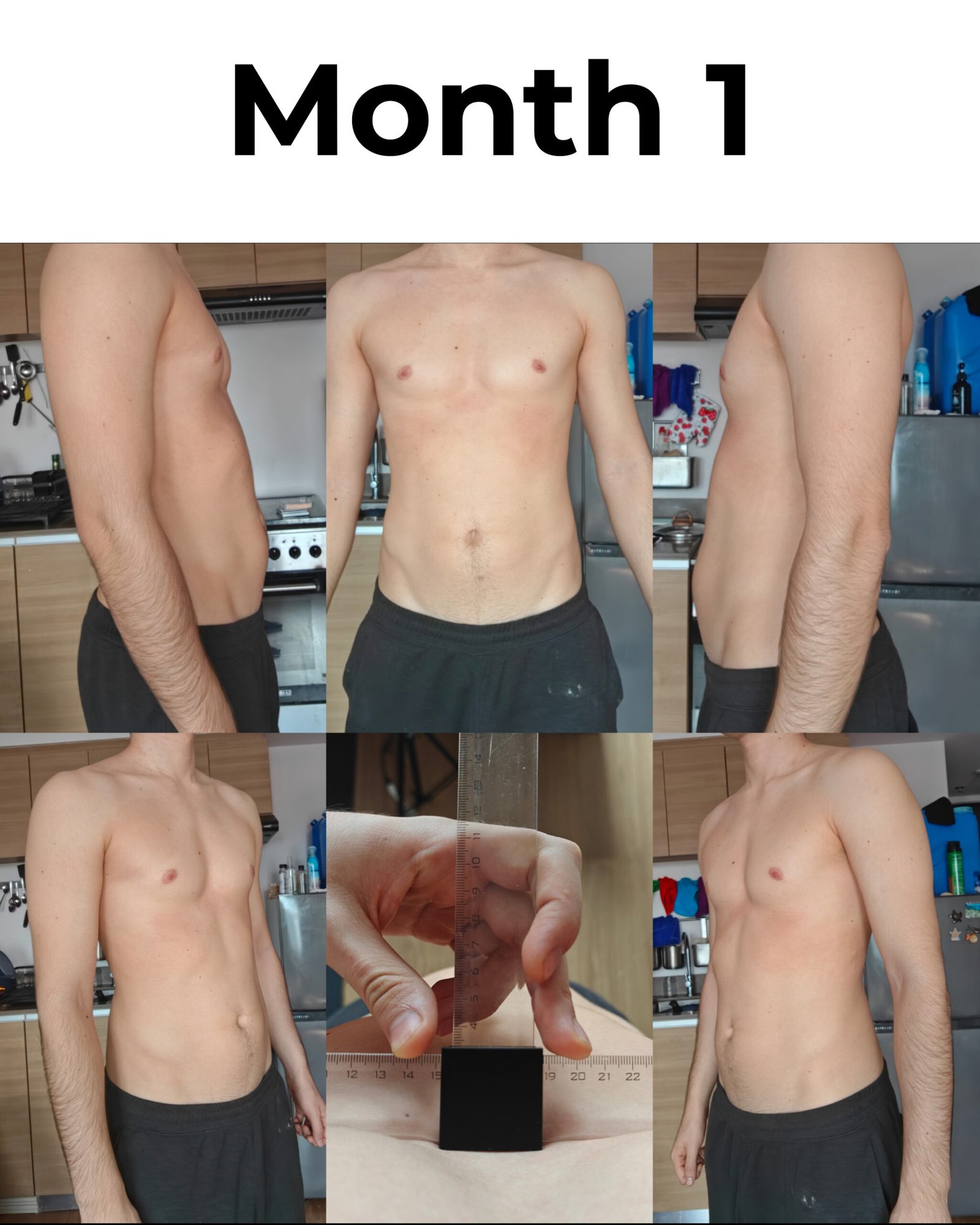
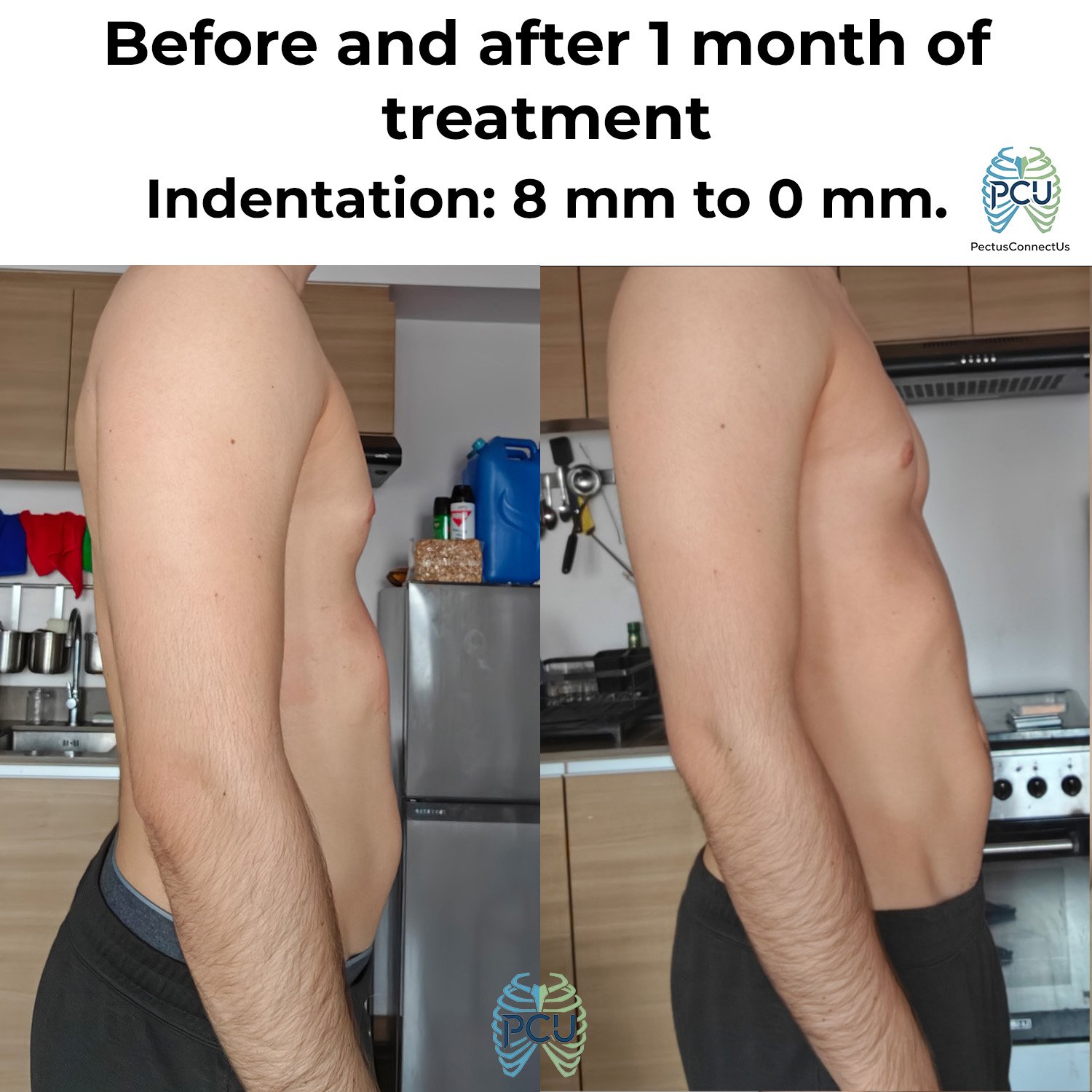
Mr. Ju began treatment with a mild 8 mm chest indentation and a pronounced rib flare on his right side—worse than the indentation itself.
In just one month, he achieved extraordinary progress, far faster than usual. His indentation fully corrected, his breathing symptoms and shortness of breath disappeared, and his rib flare is now almost completely resolved.
He is truly an outlier in terms of speed and results, but there’s a clear reason for it: he took my method very seriously. He wore his braces for over 23 hours a day, used the vacuum bell frequently, trained consistently—and often repeated the full training routine multiple times a day.
The results speak for themselves. Not only did his indentation and rib flare improve, but his posture, anterior pelvic tilt, and rounded shoulders also corrected significantly.
Even after completing treatment, he has shown no signs of regression.

Mr. M. — 35-Year-Old Client with Pectus Arcuatum (14 mm Indentation)
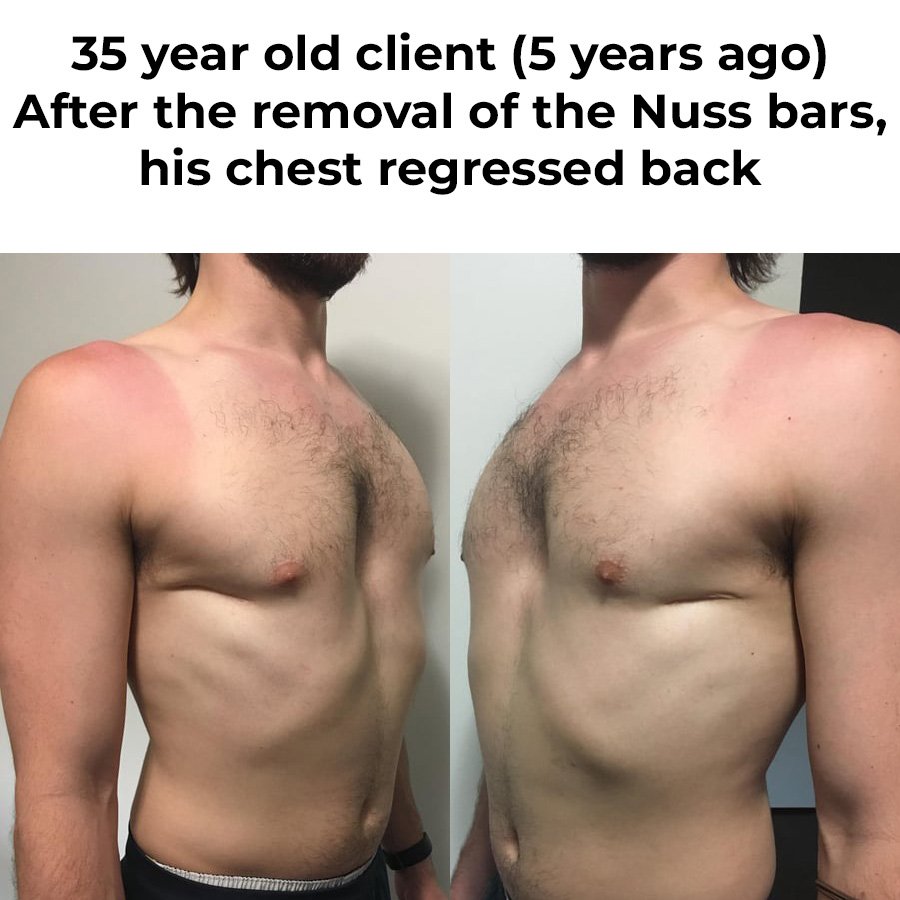
Failed Nuss surgery, with complete regression, and vacuum bell for 5 years
Mr. M has one of the most interesting stories.
Nine years ago, he underwent the Nuss procedure, where a bar was inserted beneath his ribcage. While the bar initially pushed out his indentation, once it was removed after three years, his chest slowly regressed—eventually returning fully to its previous state.
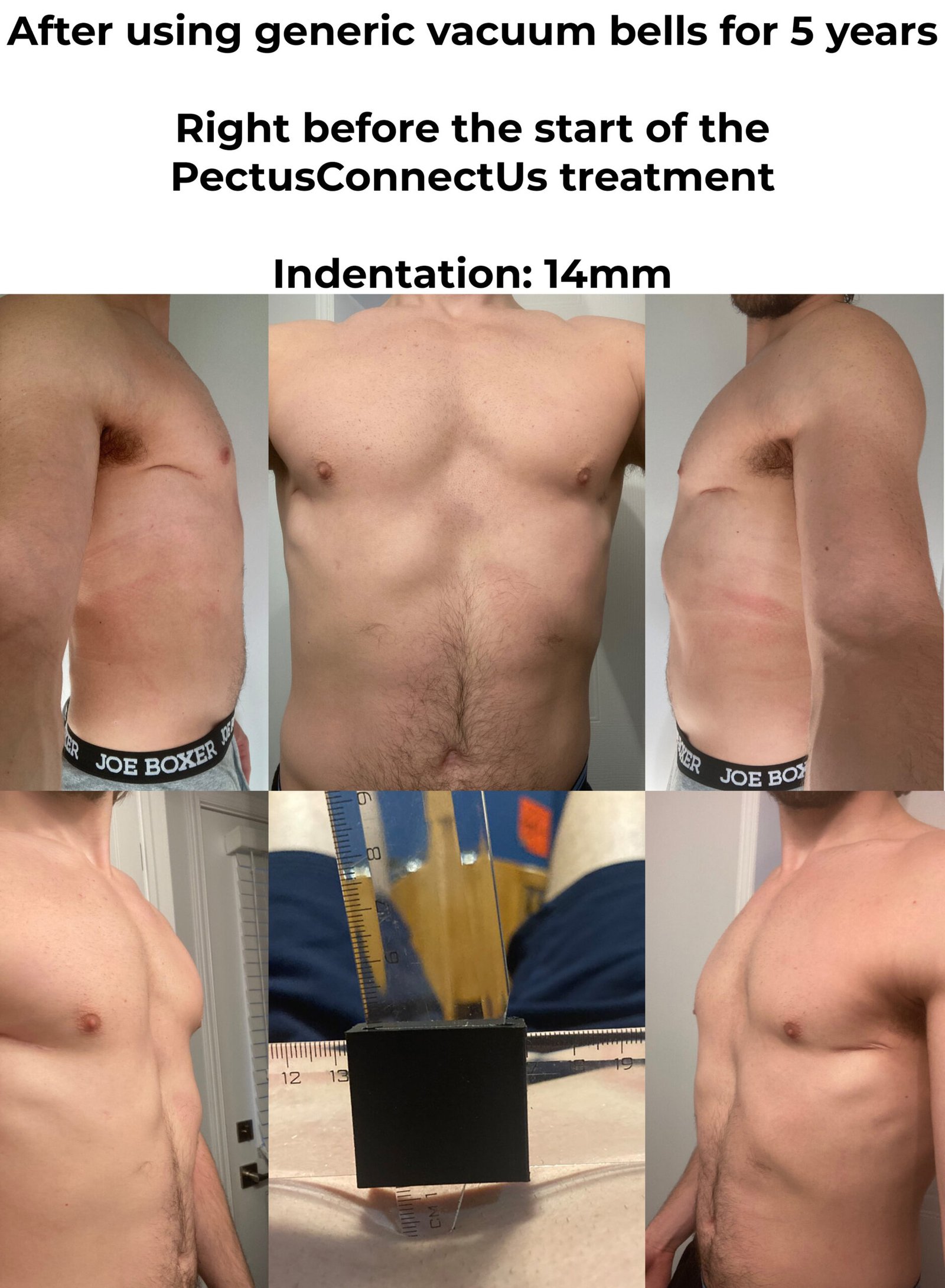
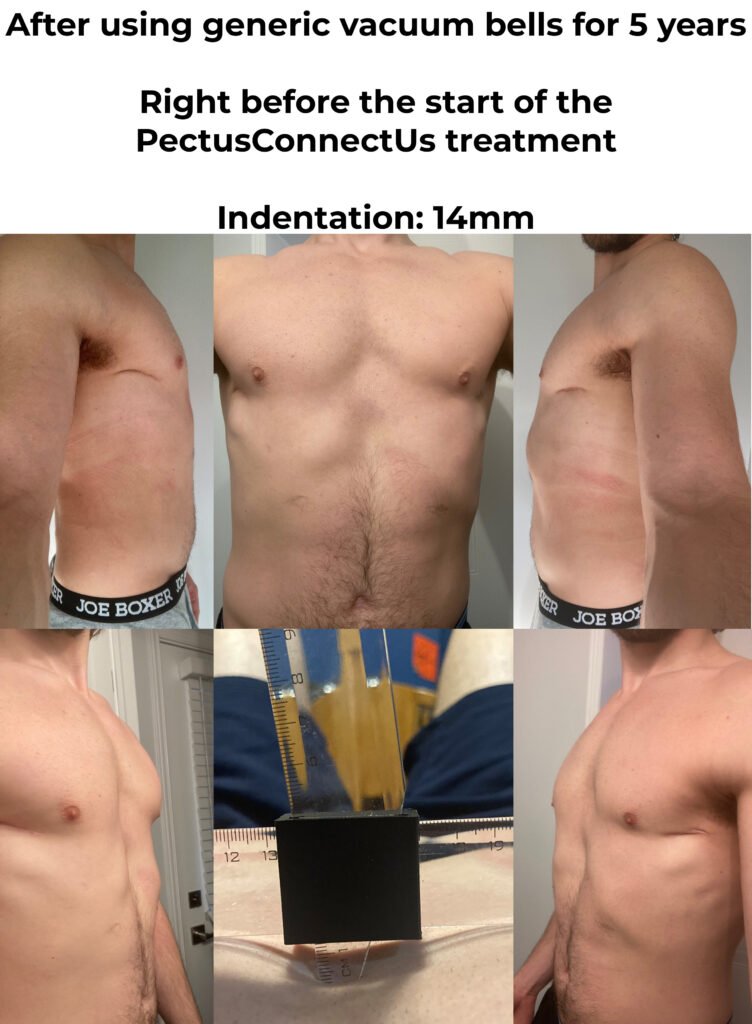
Five years ago, he purchased a vacuum bell and began his own therapy. He used it diligently, and over time, it gradually elevated his chest. For five years, he combined the vacuum bell with his own style of training, and the results were clearly visible in his photos.
Recently, he reached out to me because he wanted to finally overcome the indentation fully—and ensure it would never return.
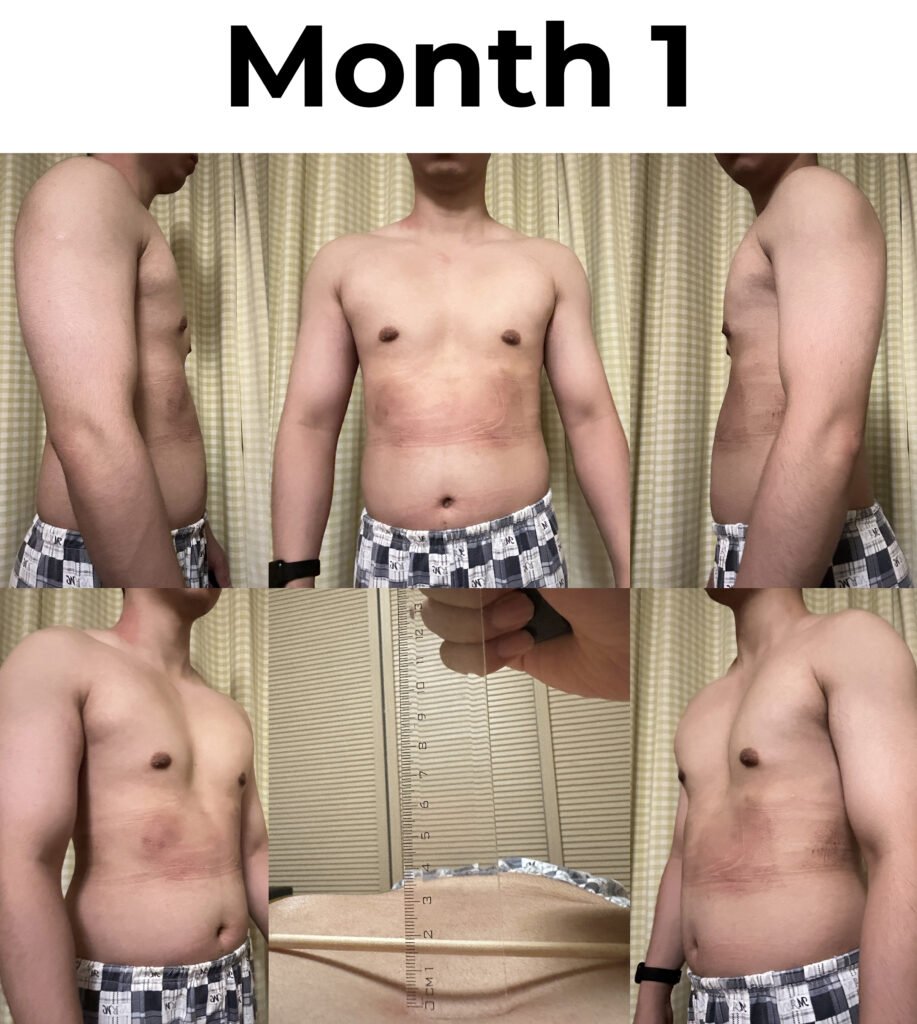
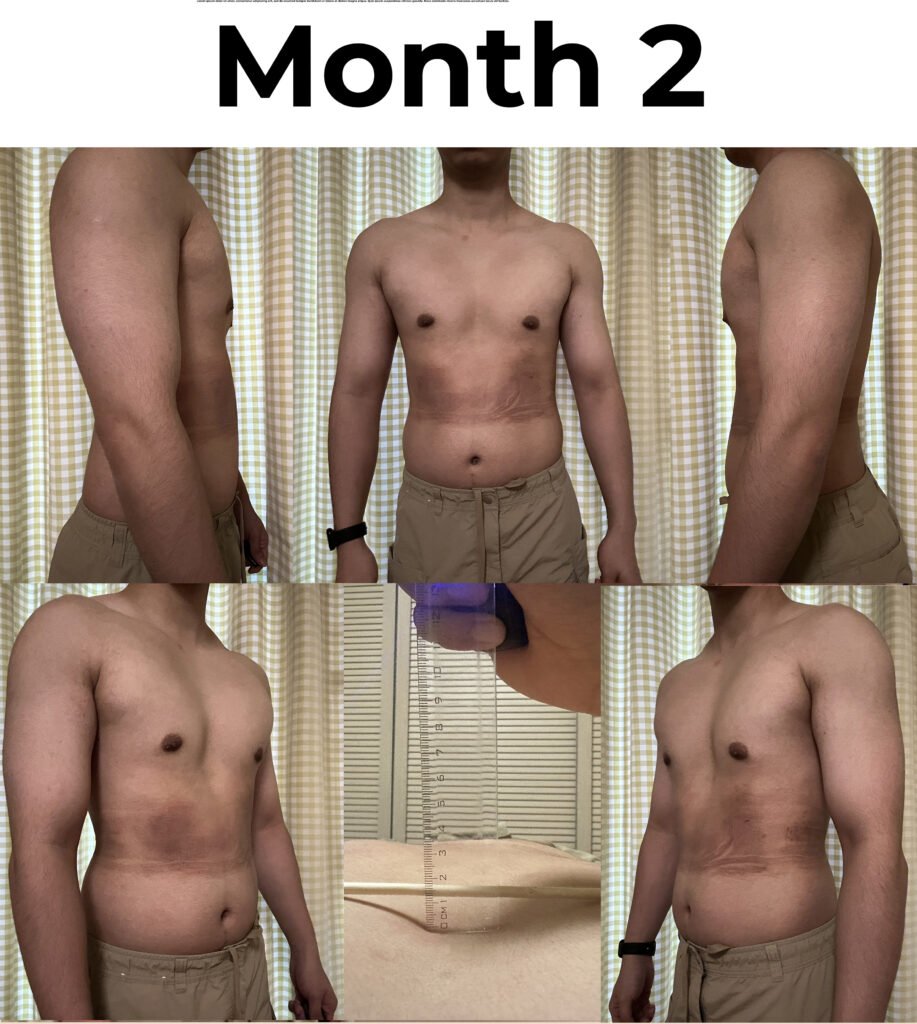
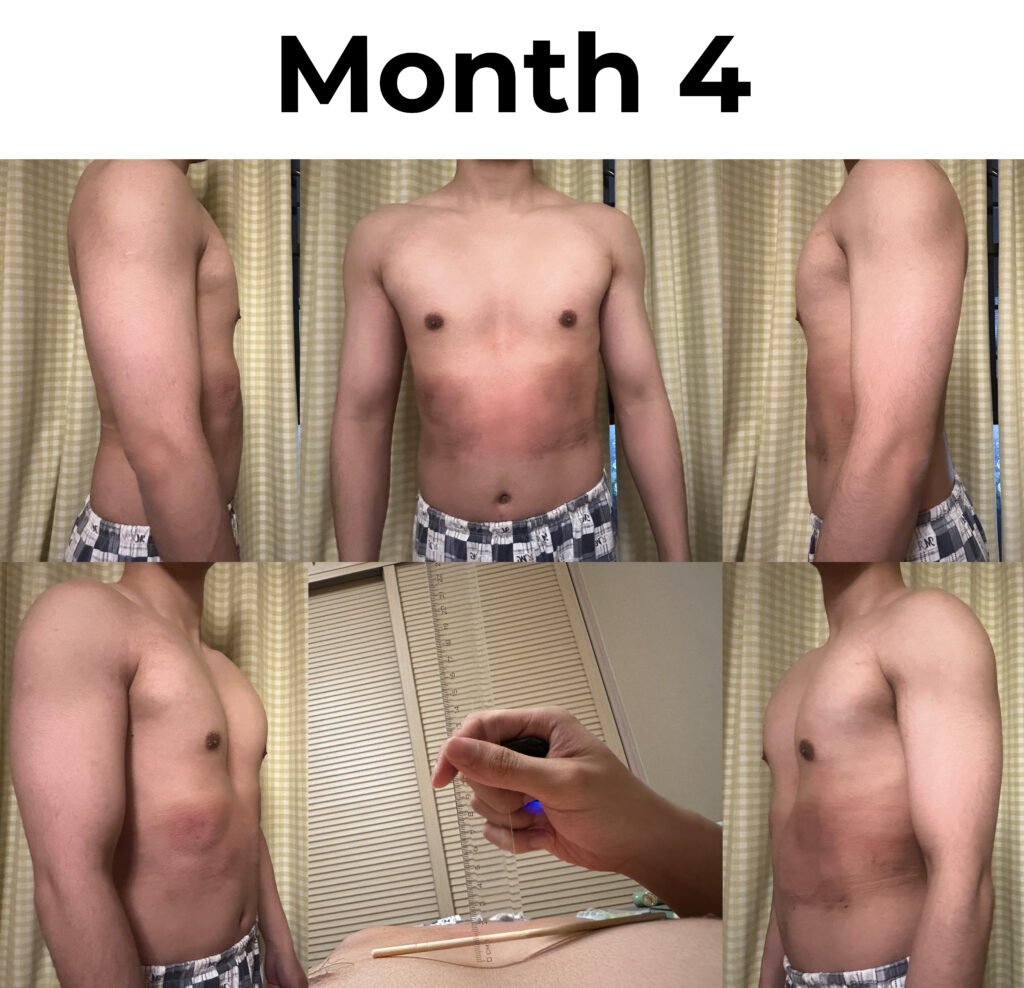
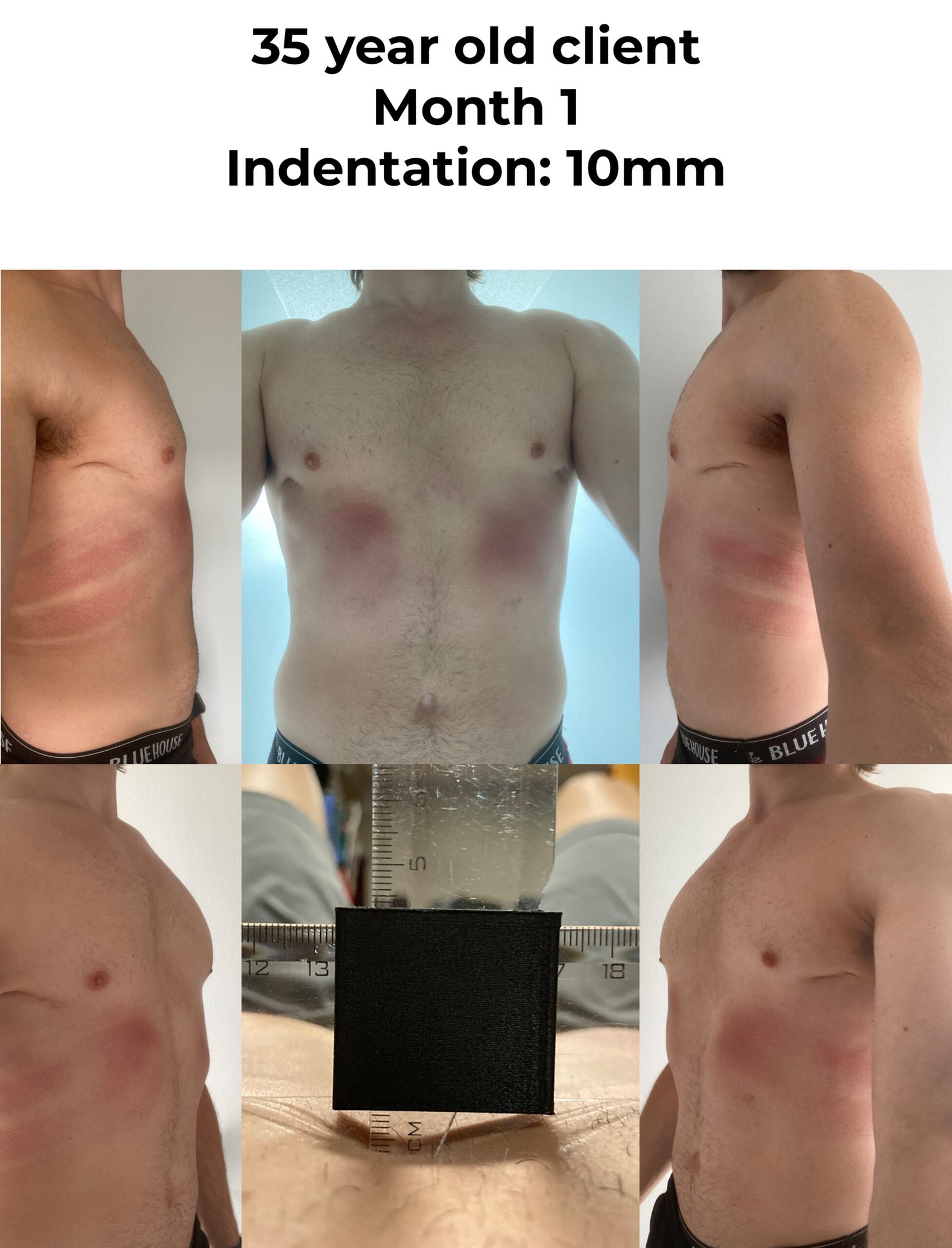
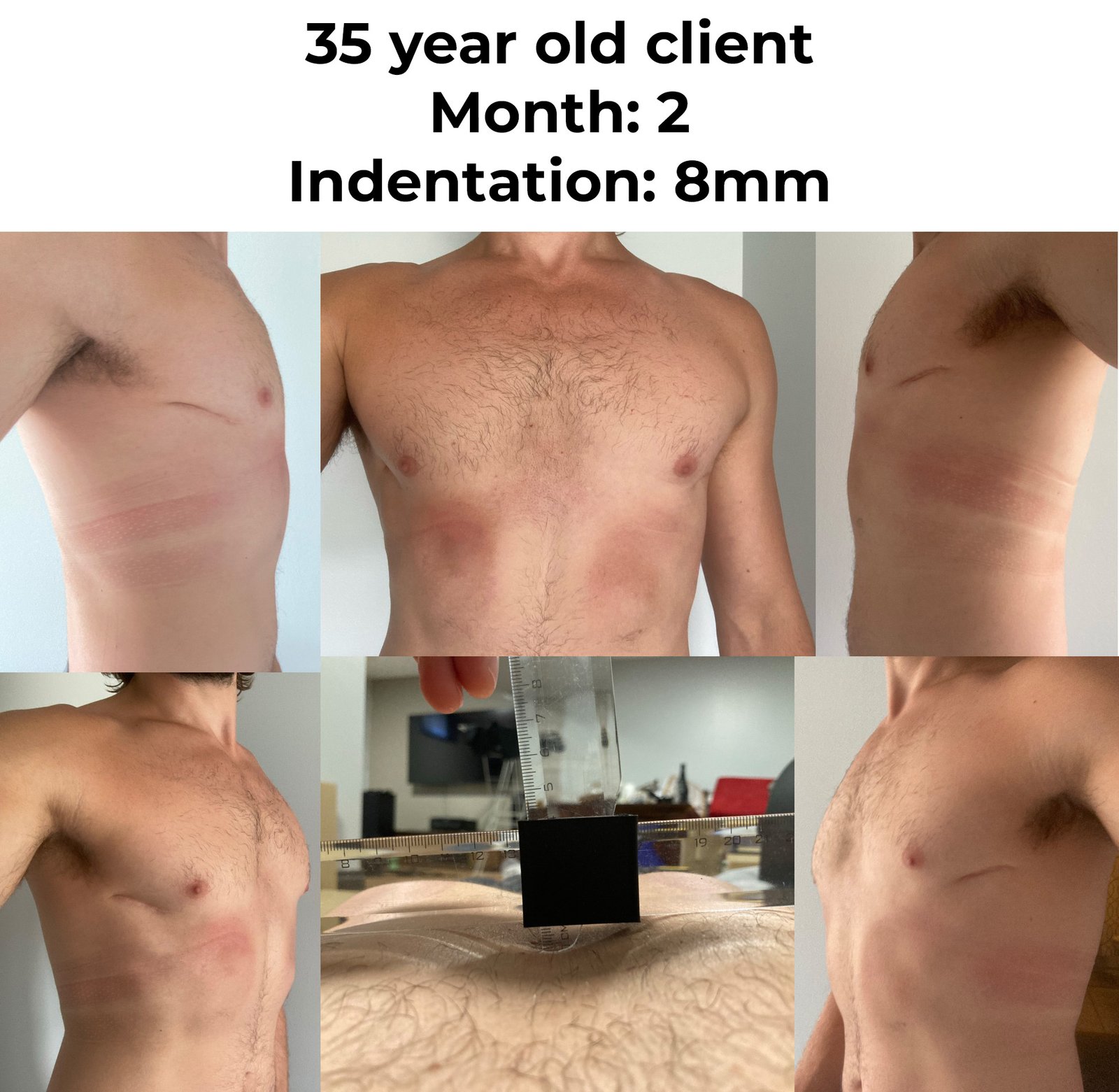
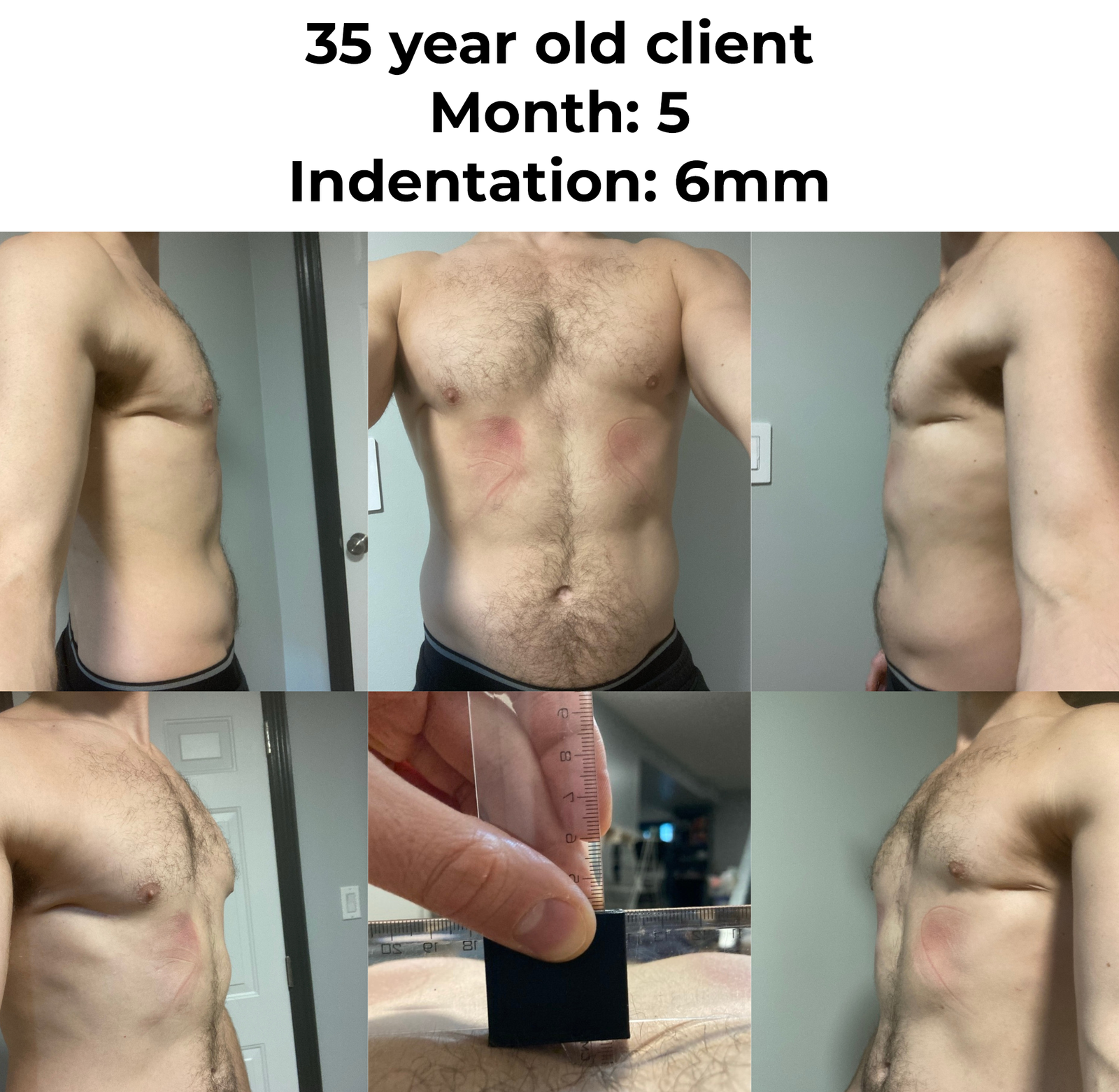
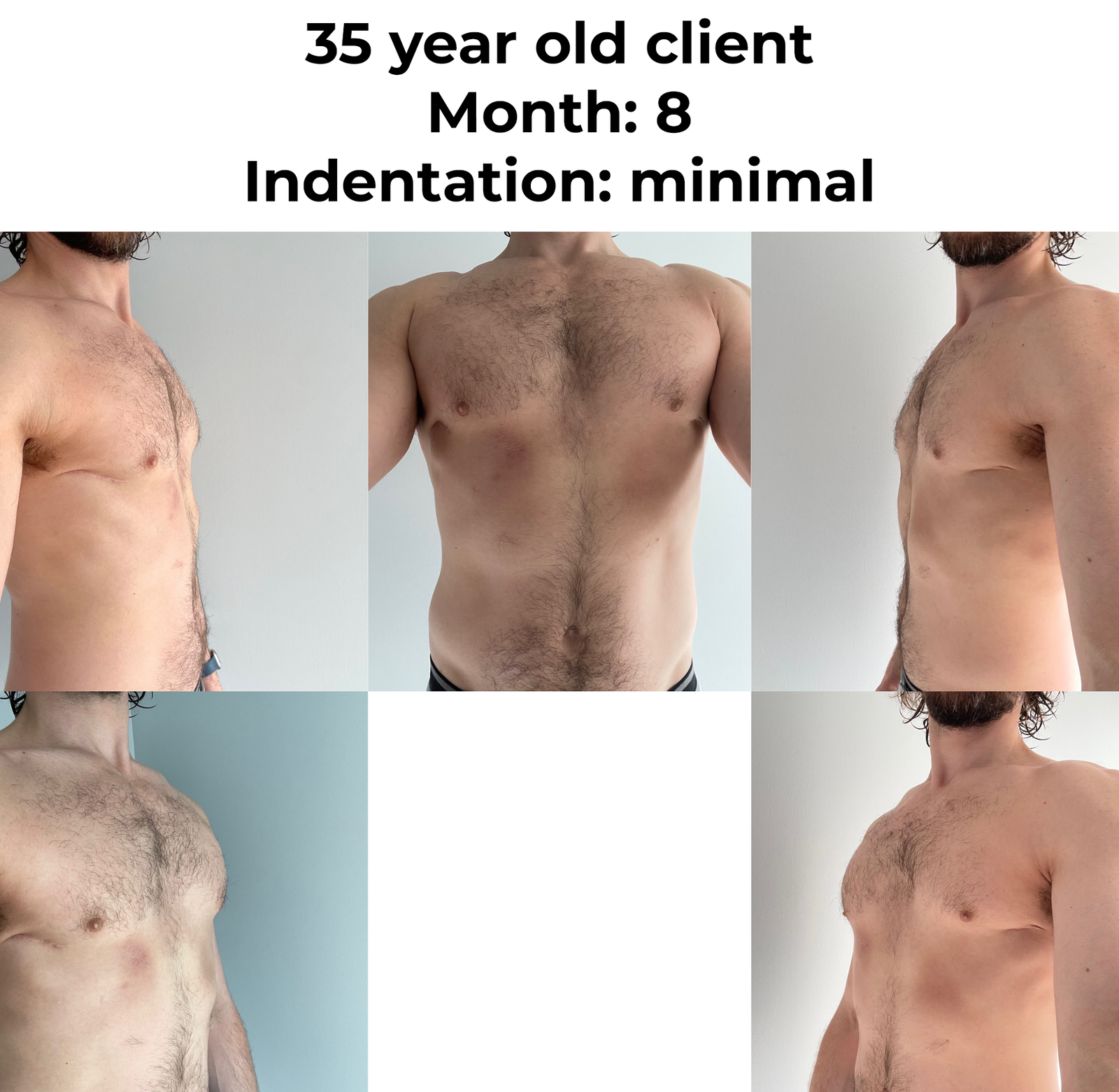
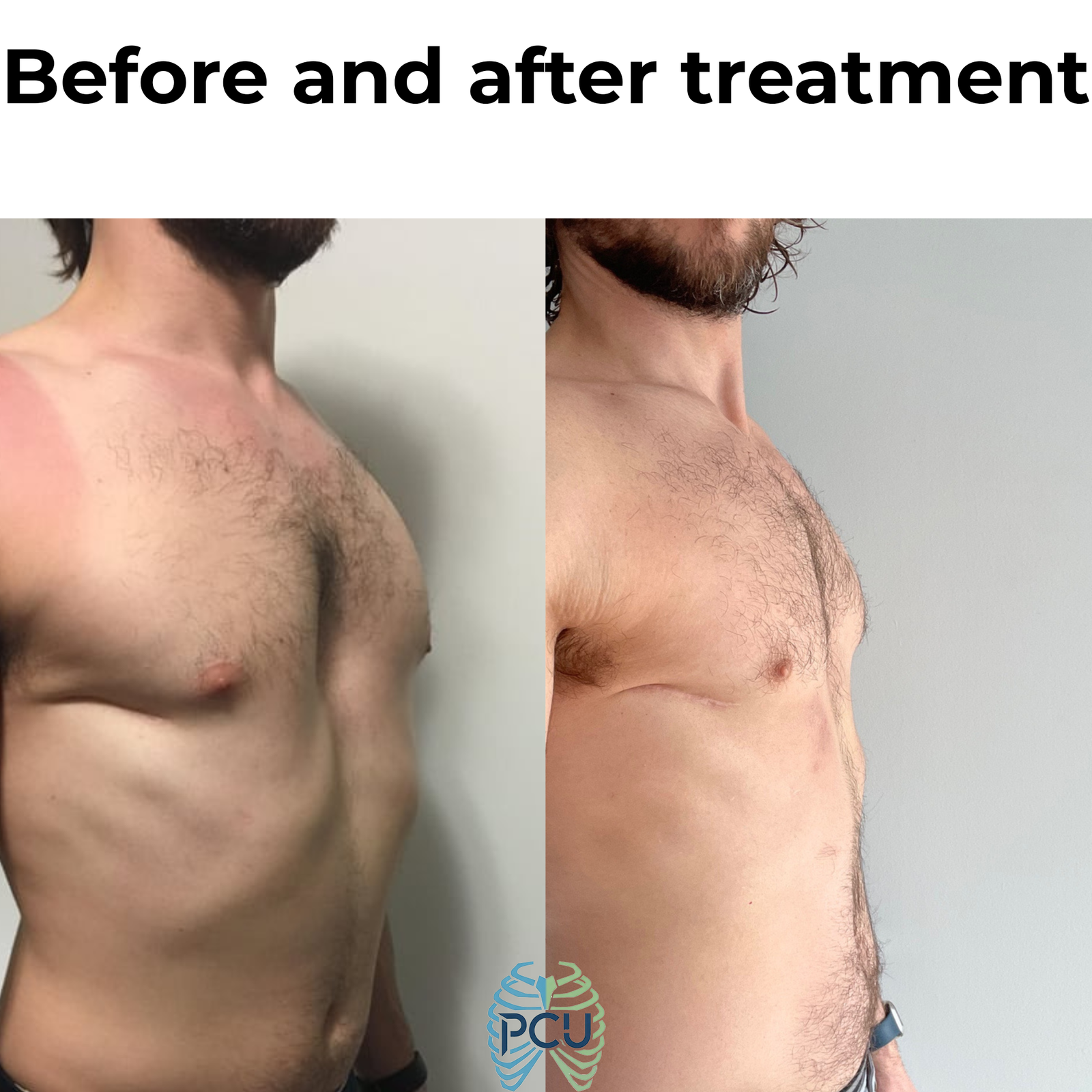
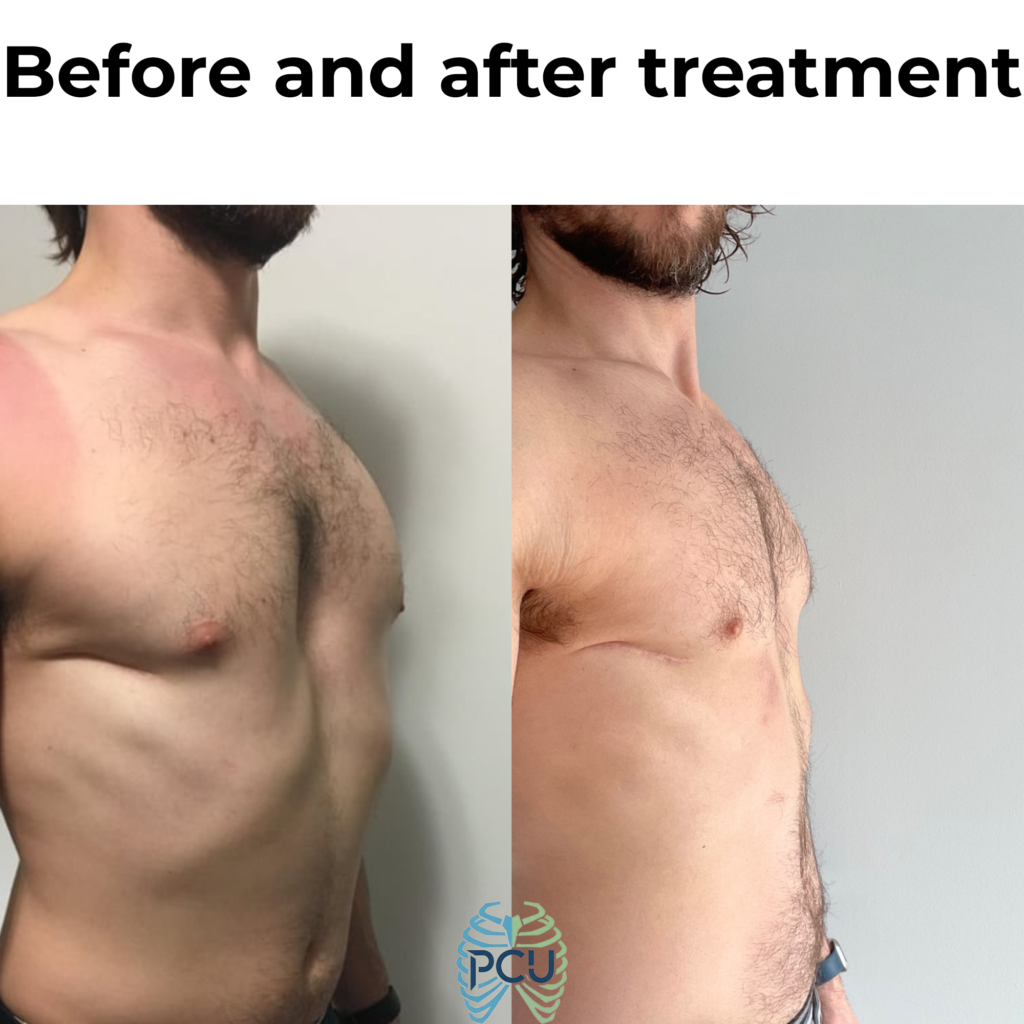
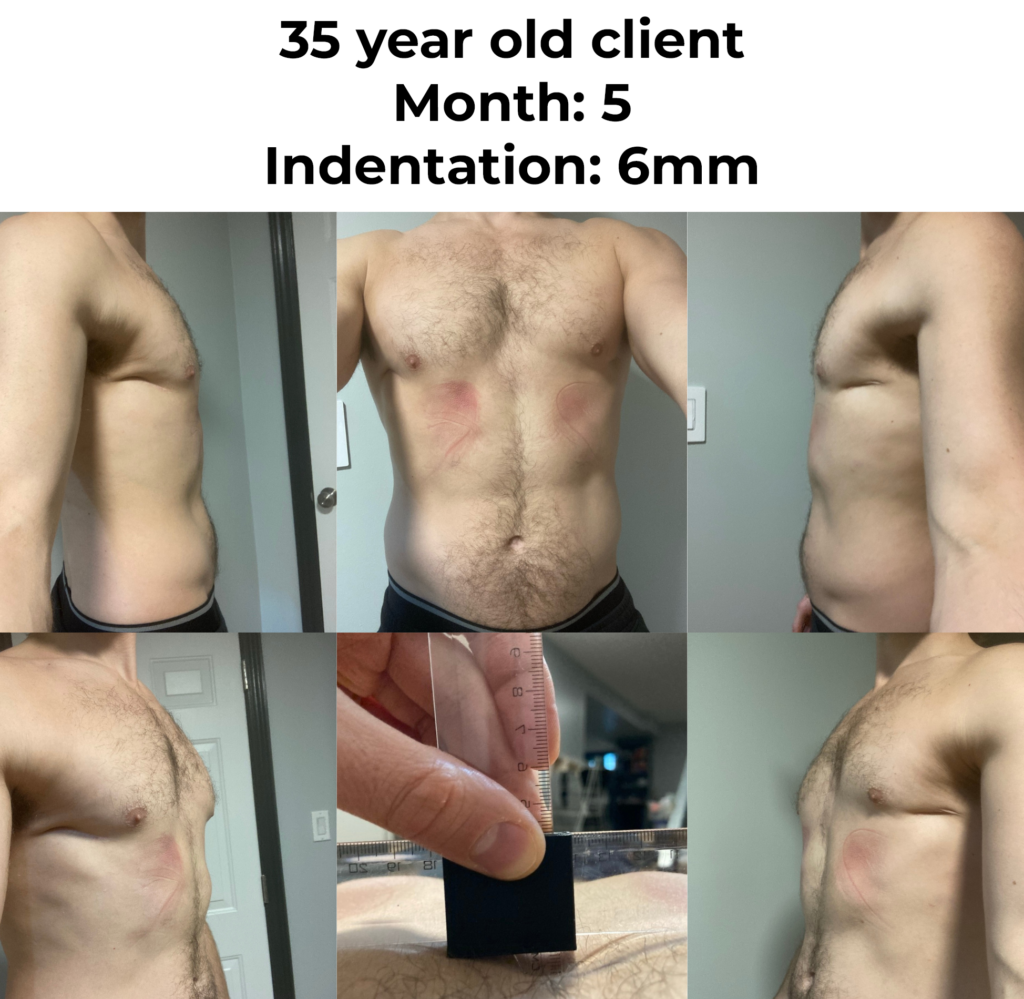
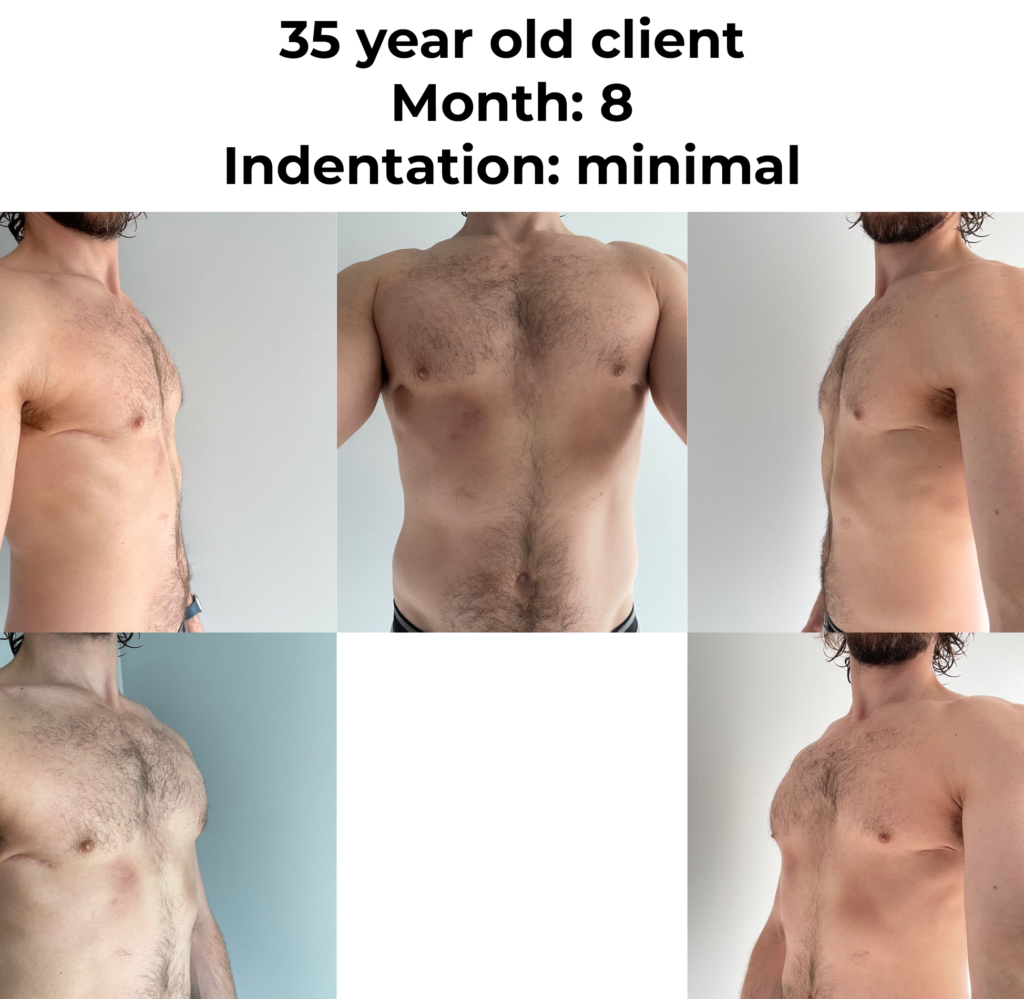
Recently, he reached out to me because he wanted to finally overcome the indentation fully—and ensure it would never return. Looking at his progress over the past 8 months, the transformation is truly remarkable, especially considering that he has pectus arcuatum—the most rigid of all chest deformities. Before starting our treatment, his indentation measured 14mm. After 1 month, it reduced to 10mm; after 2 months, it was down to 8mm; and by the 5-month mark, it was just 6mm. Now, at 8 months, the remaining indentation is minimal, showing an overall improvement of more than 1 cm. Furthermore, his lower ribs (rib flare) have completely retracted by 100%. Throughout these 8 months, he has evolved into a completely healthy individual, entirely free of any health complaints.
As you can see in the photos, the changes to his chest are astonishing. While a very slight depression remains, it is important to understand that this is perfectly normal. It no longer qualifies as a chest deformity; rather, it is simply a natural genetic trait. This incredible journey proves what dedicated, targeted therapy can achieve.


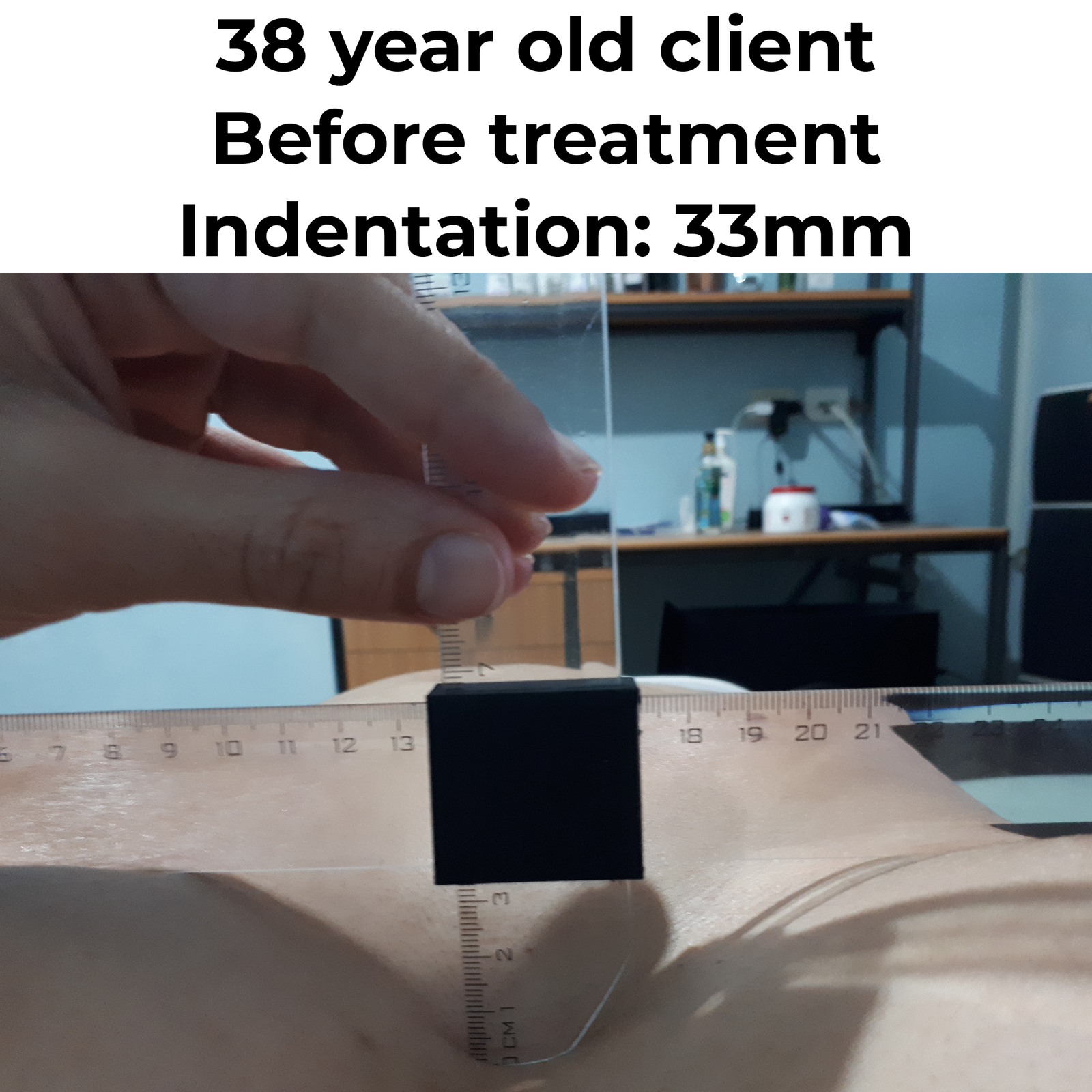
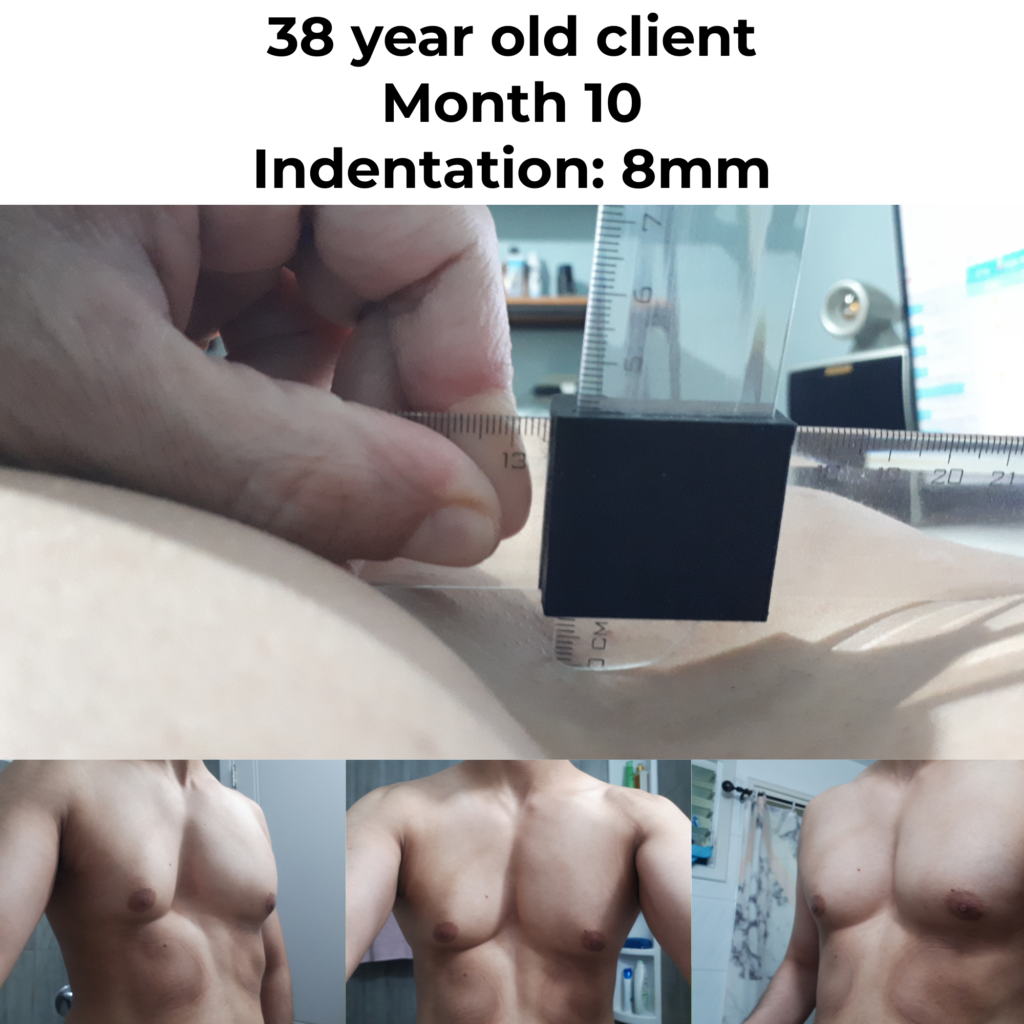
Mr. K. — 38-Year-Old Client with severe asymmetric Pectus Excavatum (33 mm Indentation)
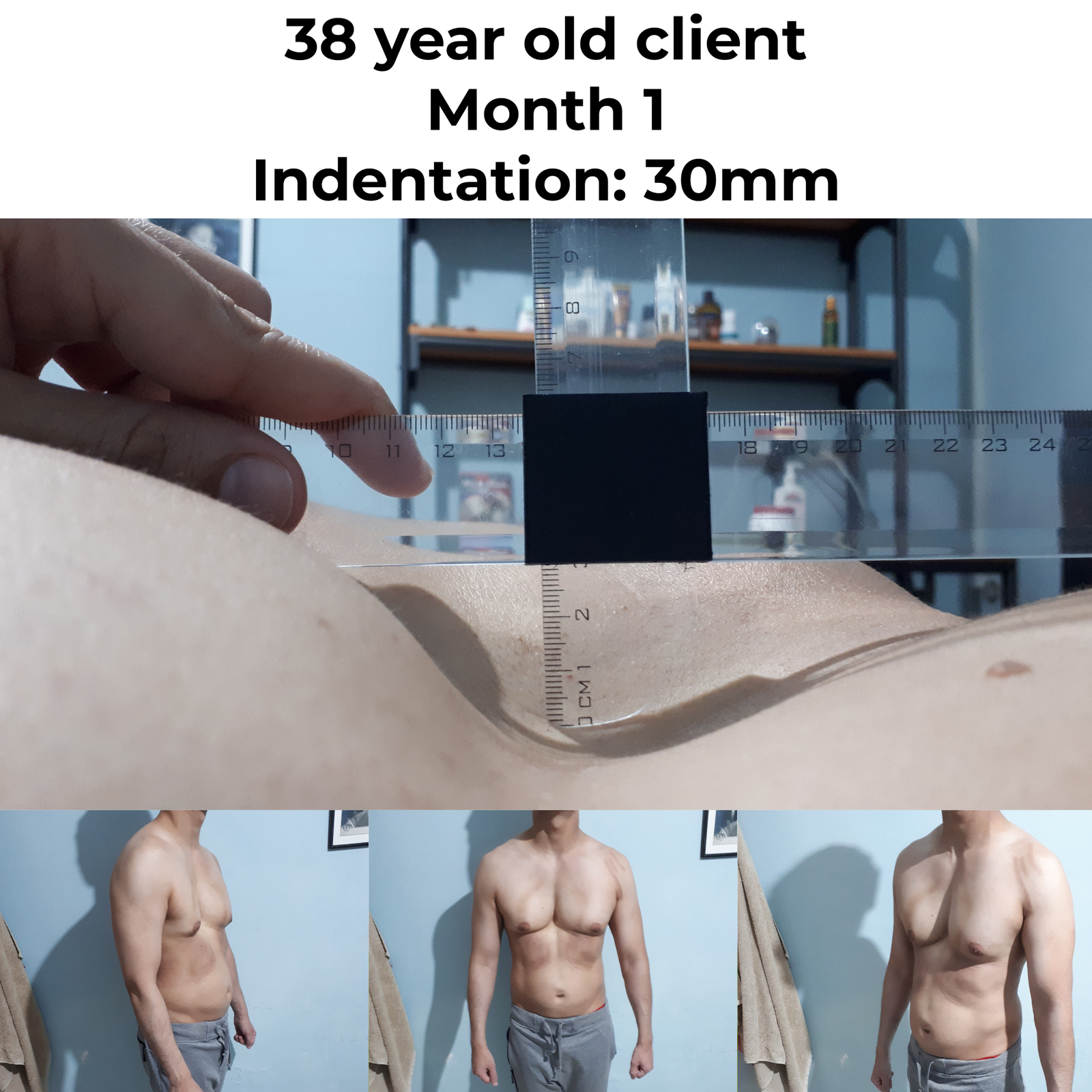
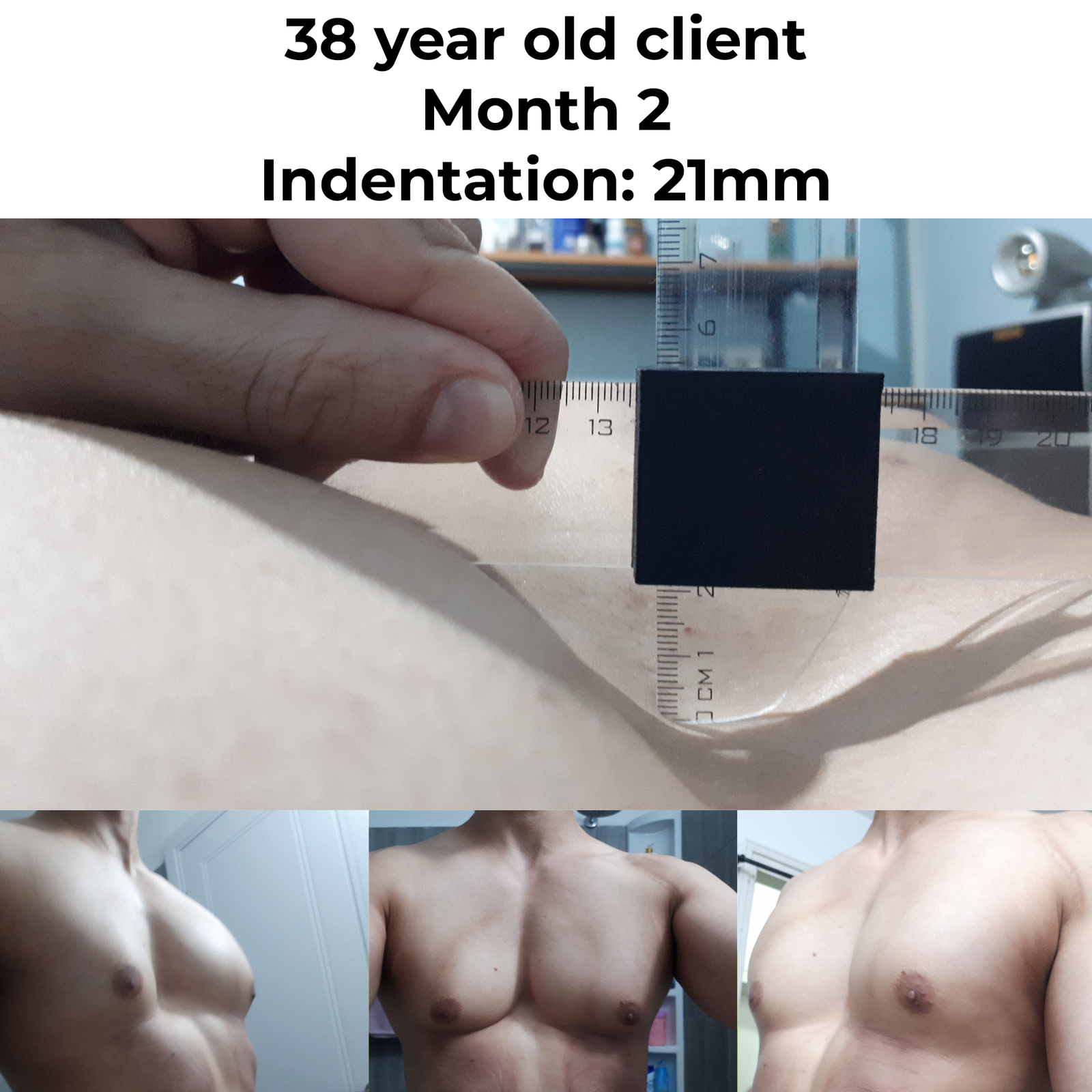
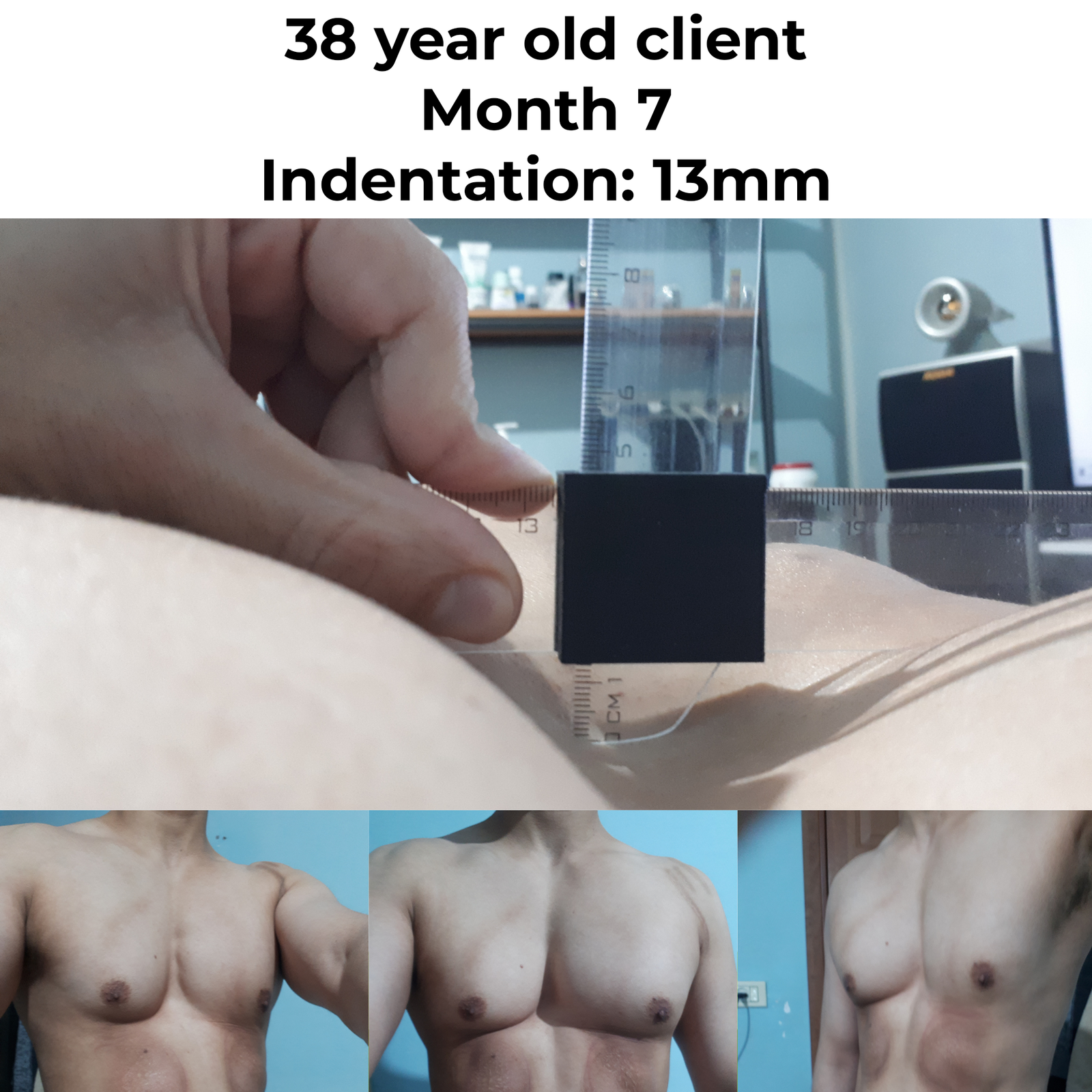
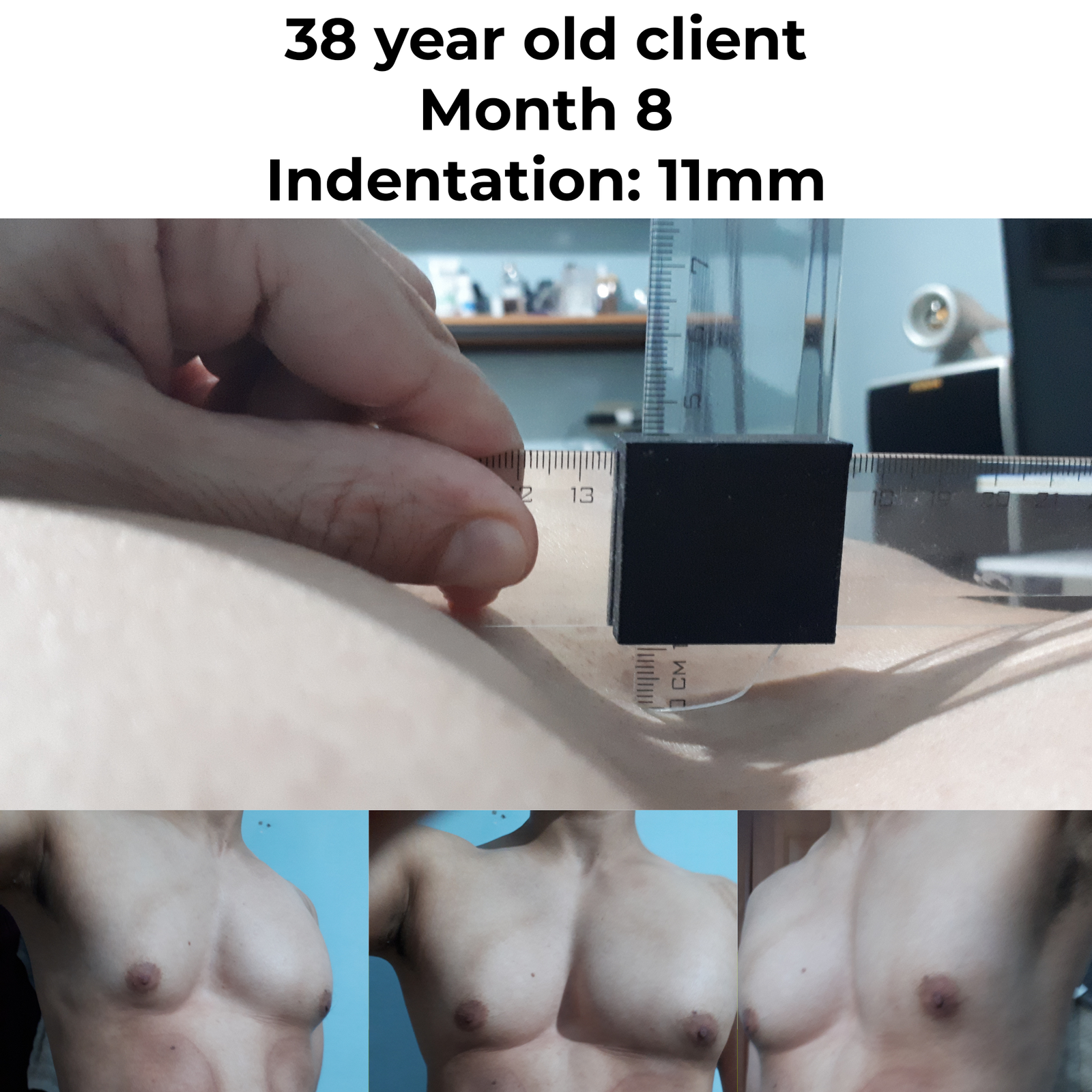
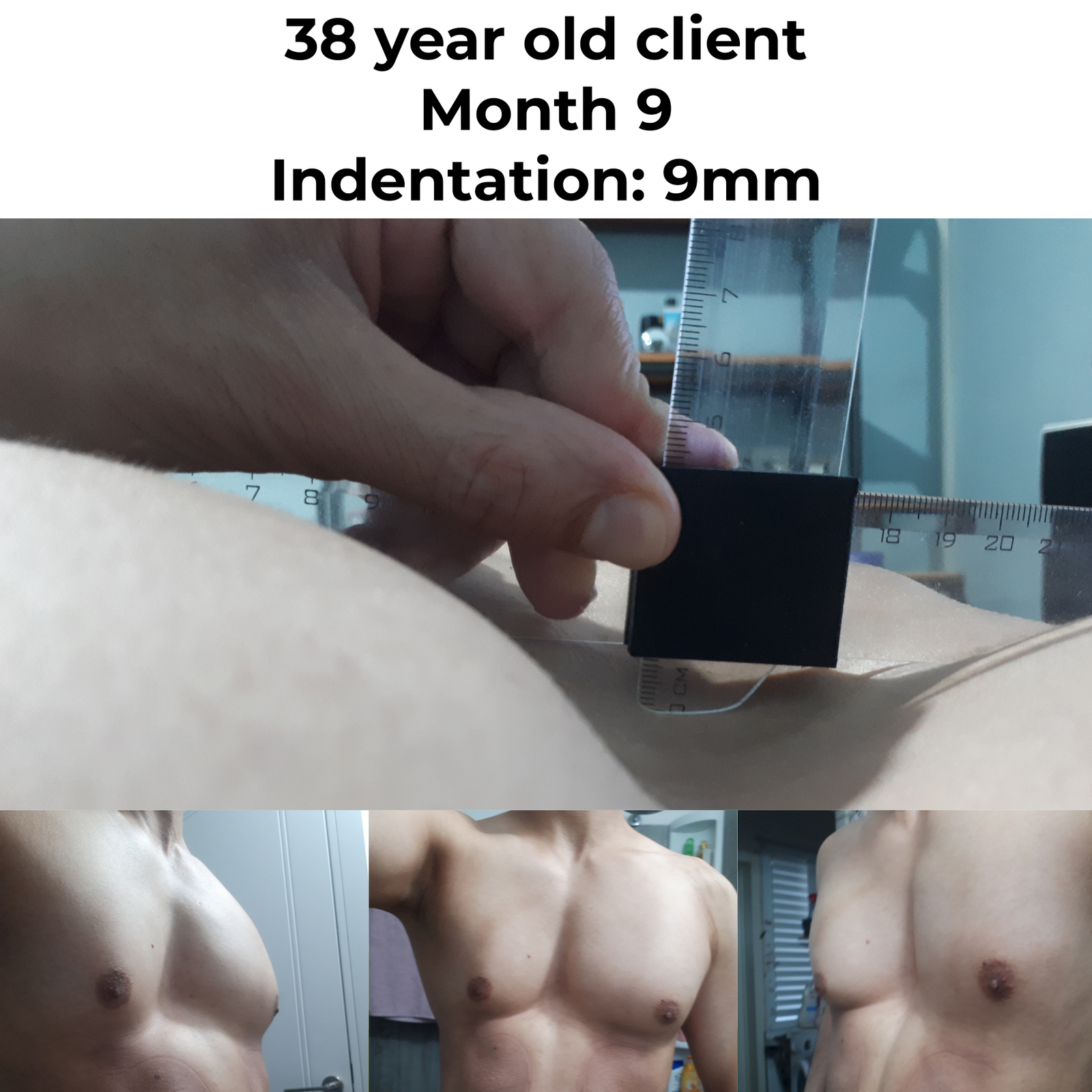
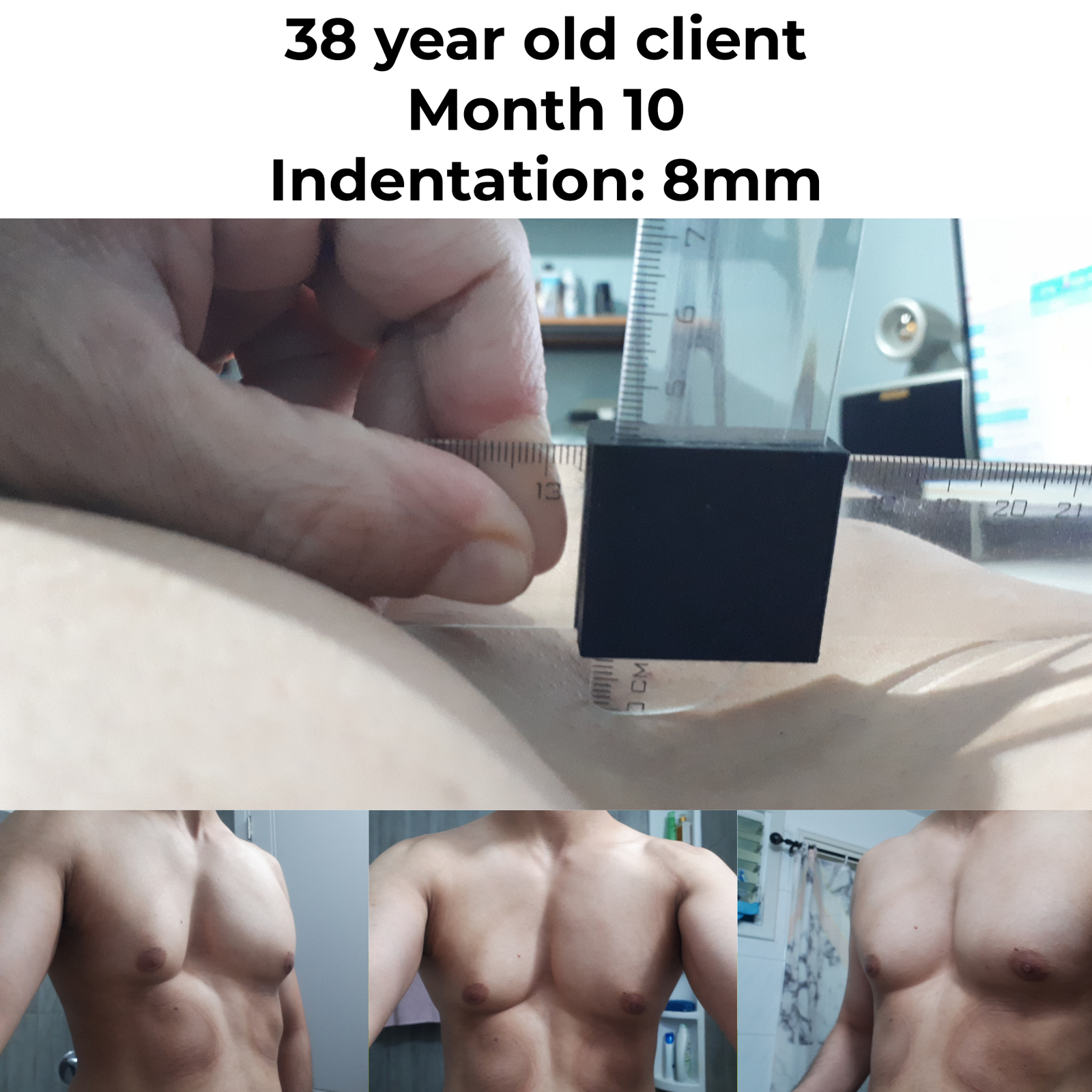
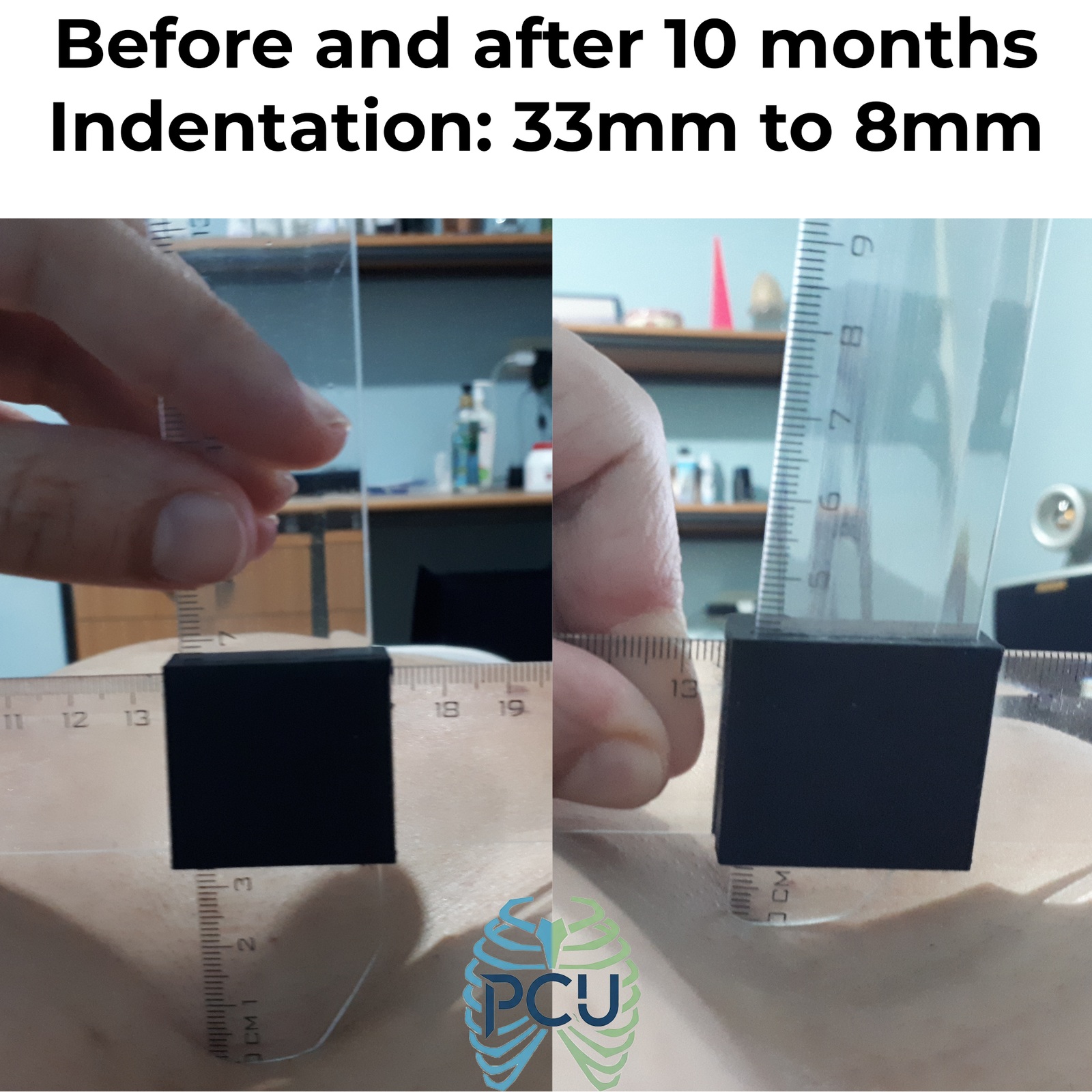
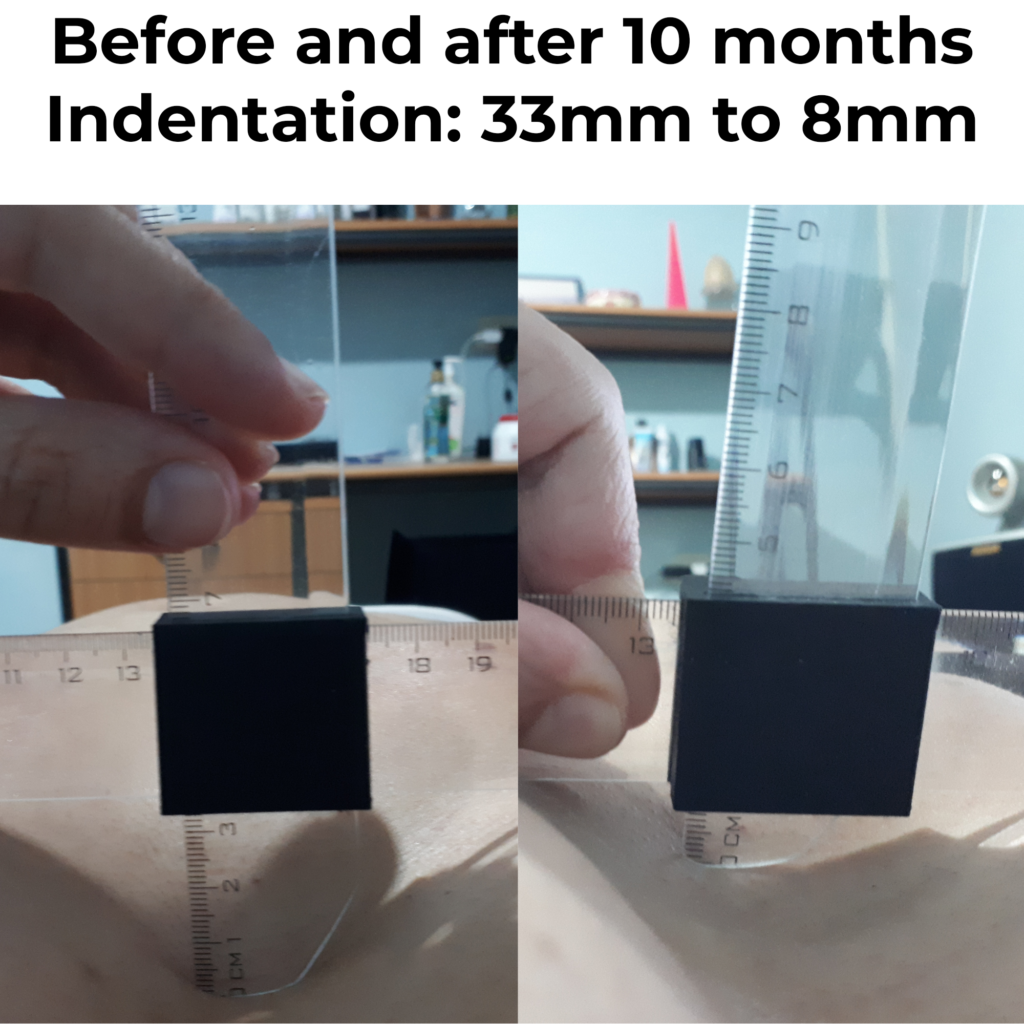
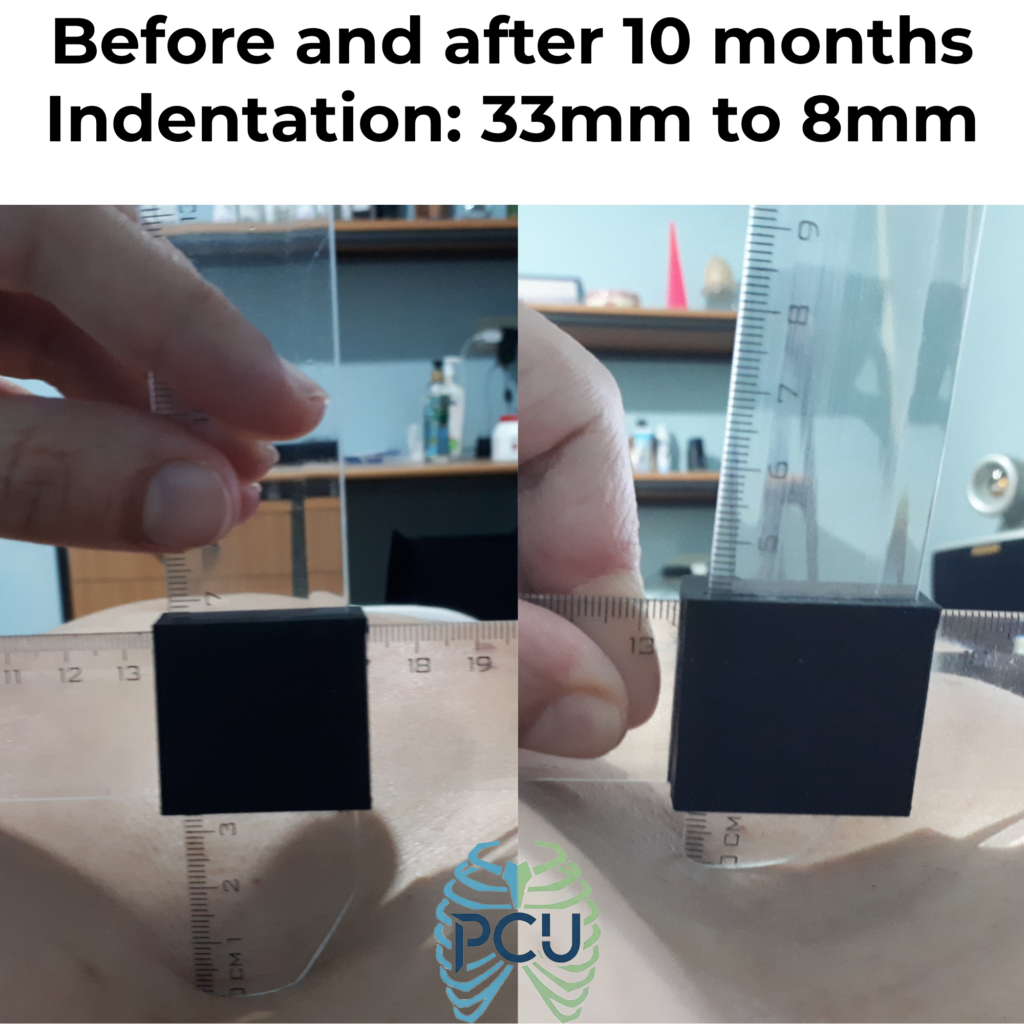
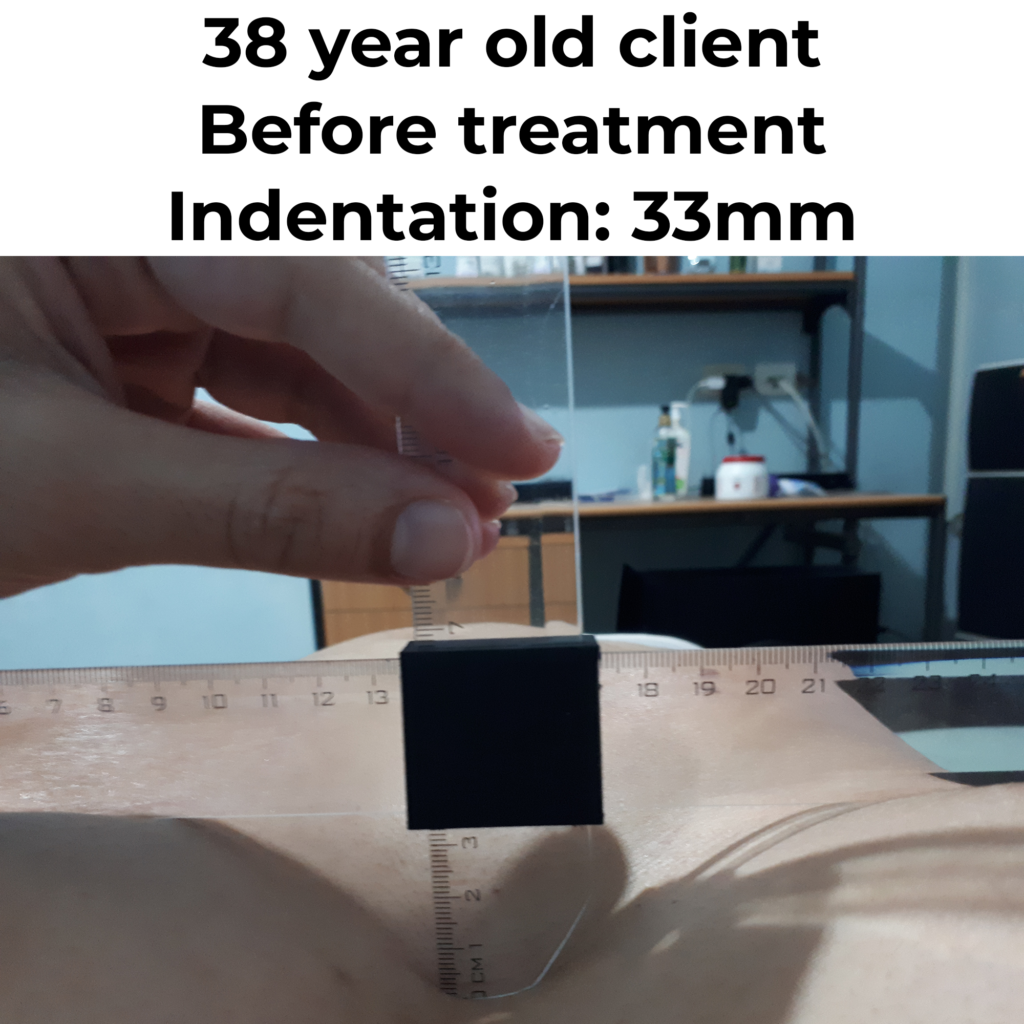
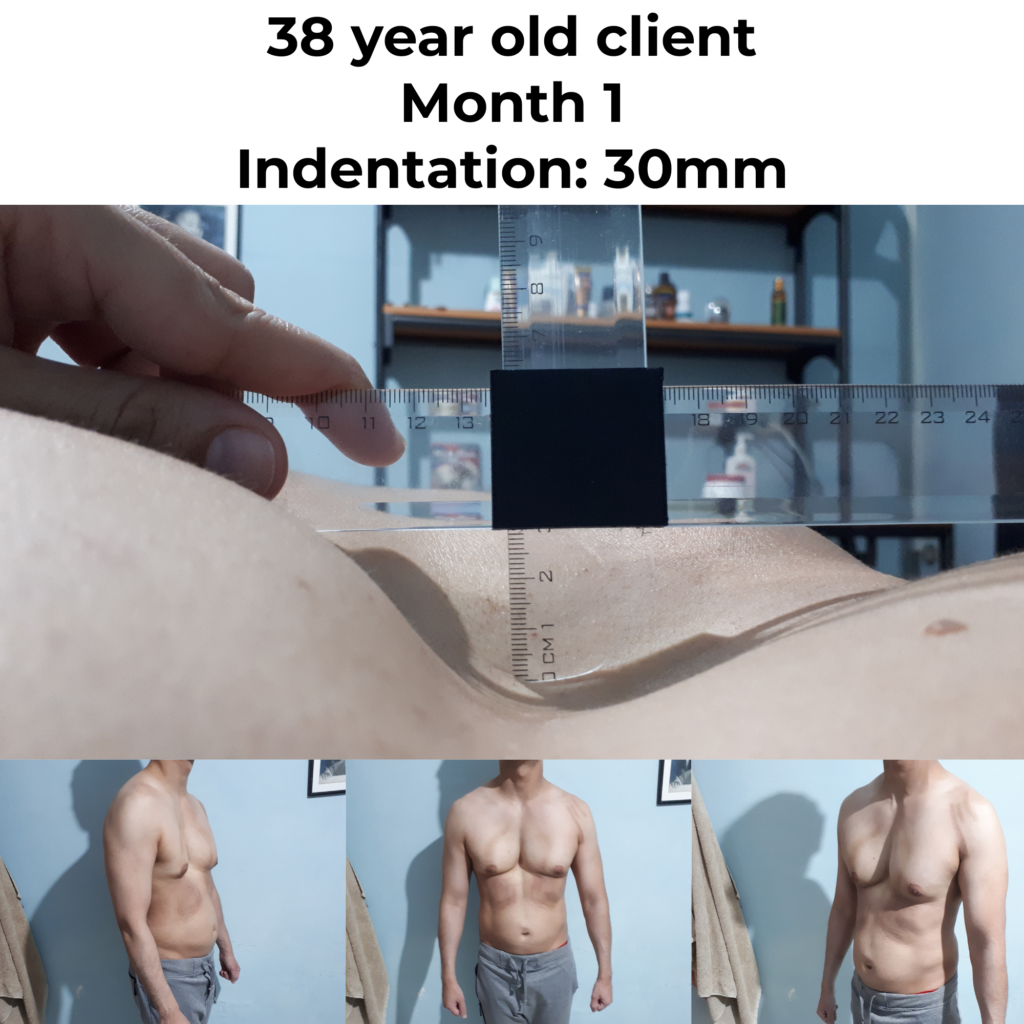
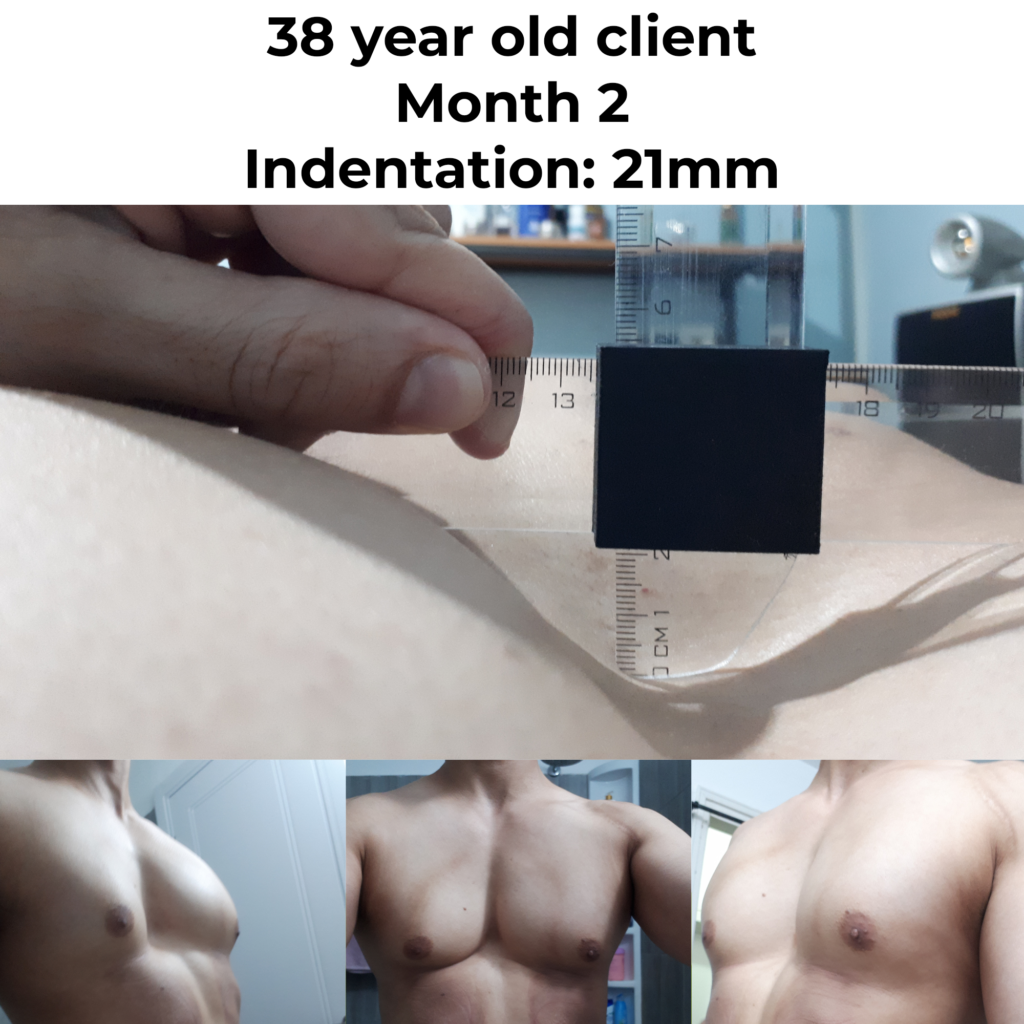
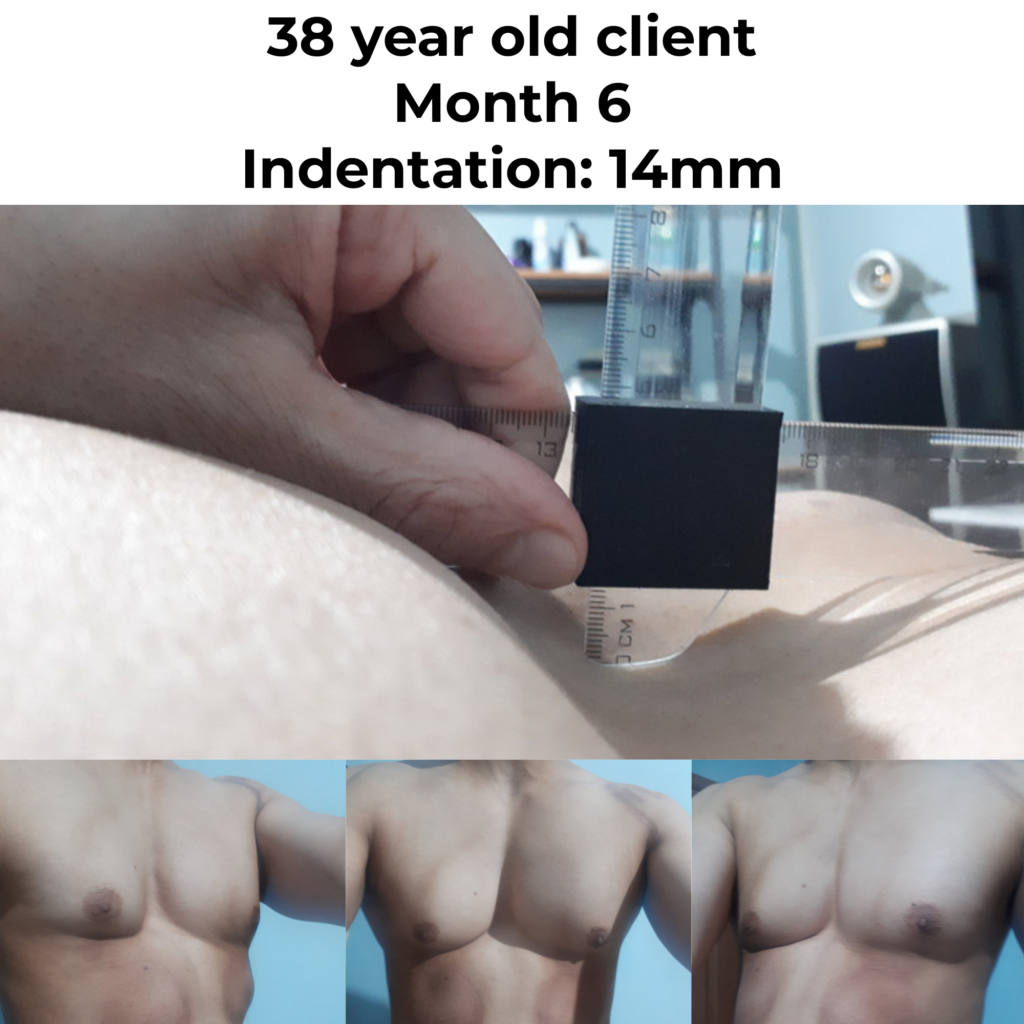
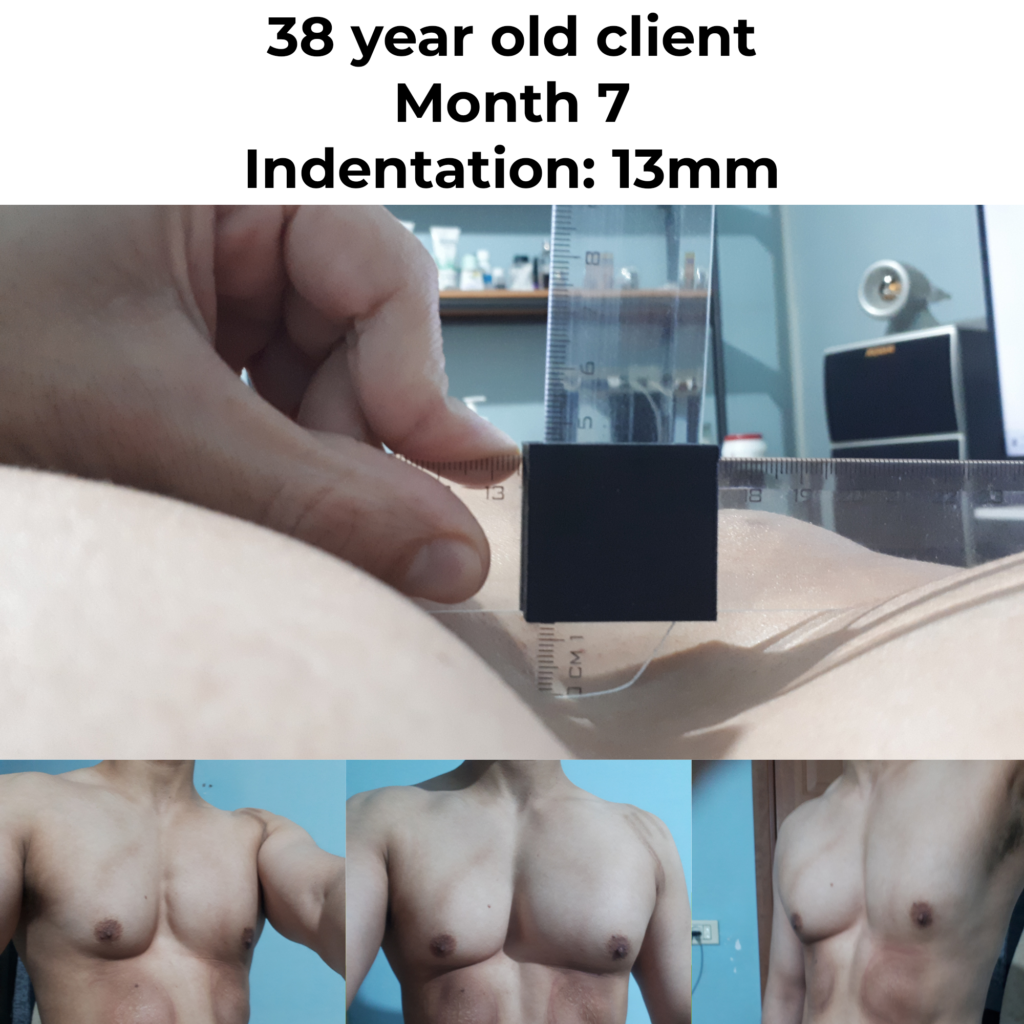
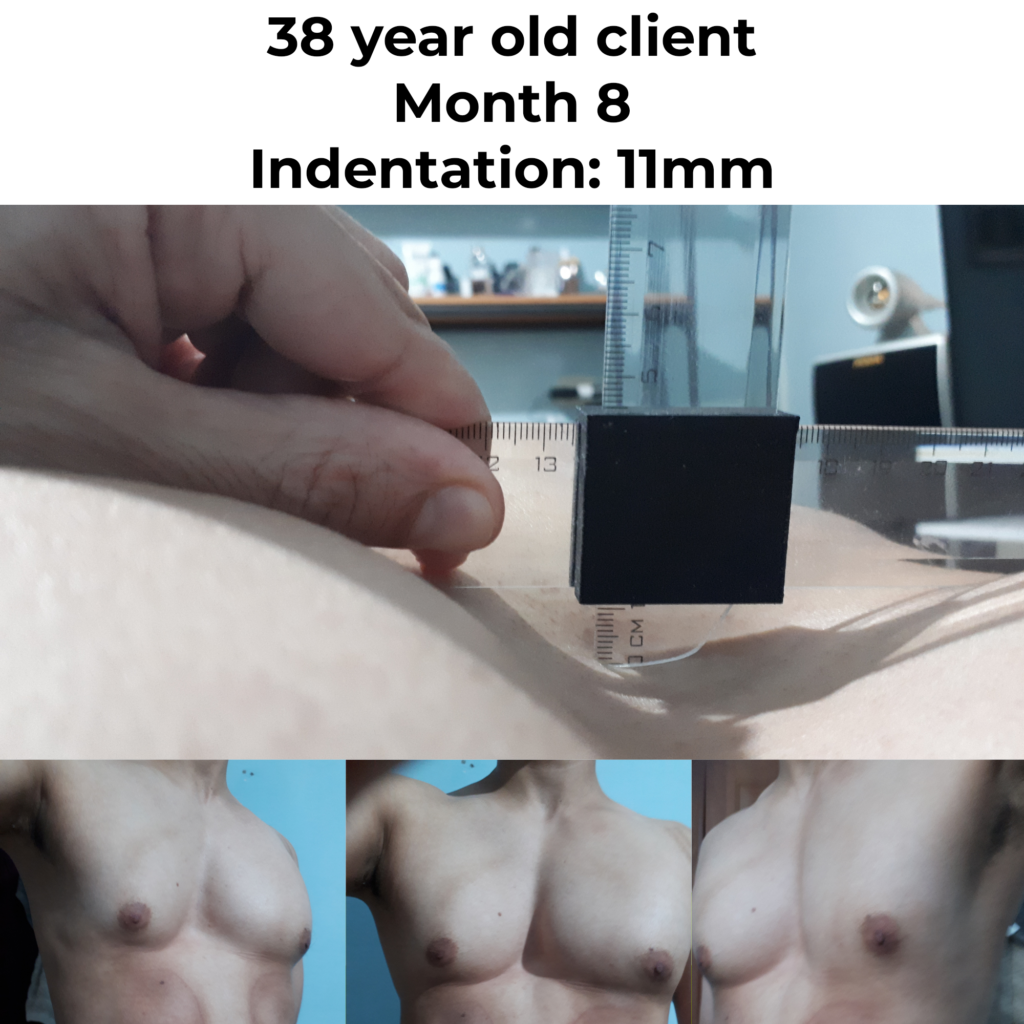
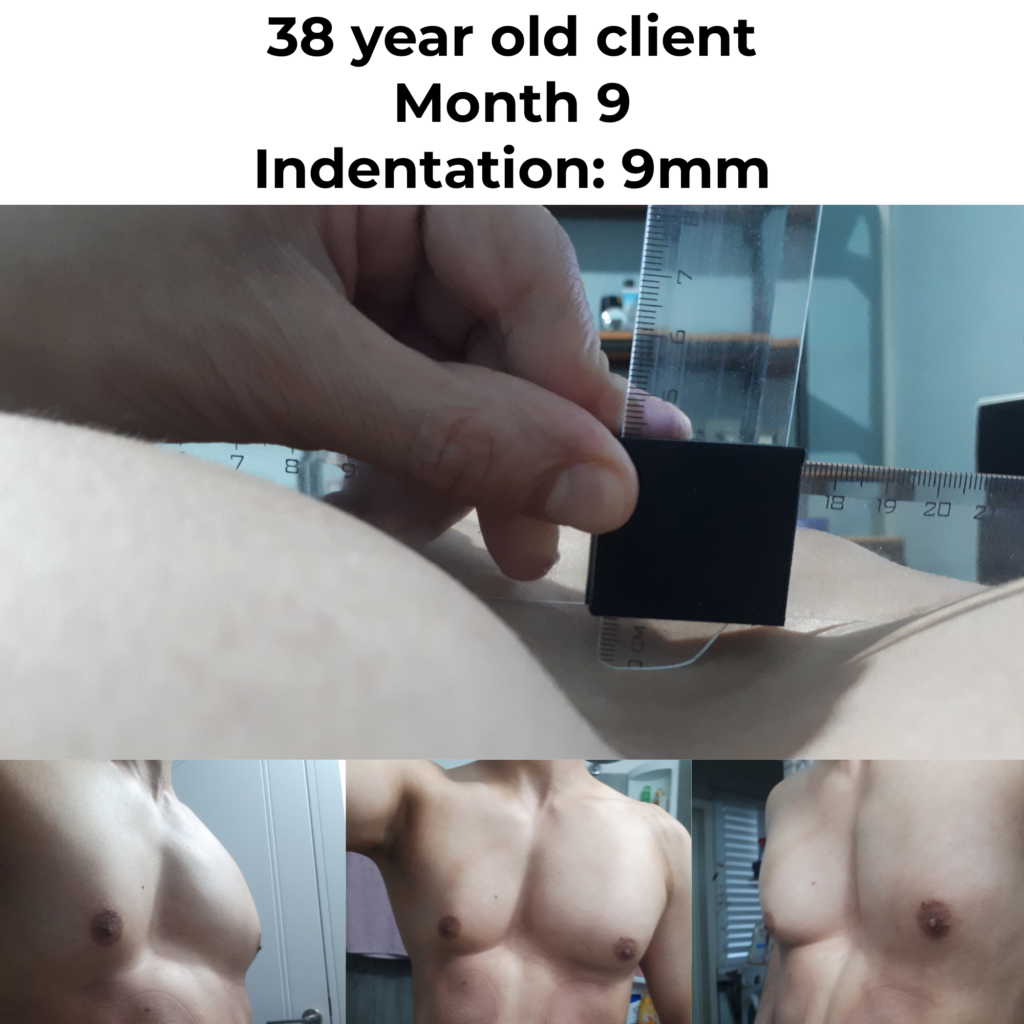
Our 38-year-old client began his treatment with a severe asymmetric pectus excavatum and a deep 33mm indentation. Fast forward 10 months, and his indentation has improved from 33mm to 8mm—an impressive 76% reduction.
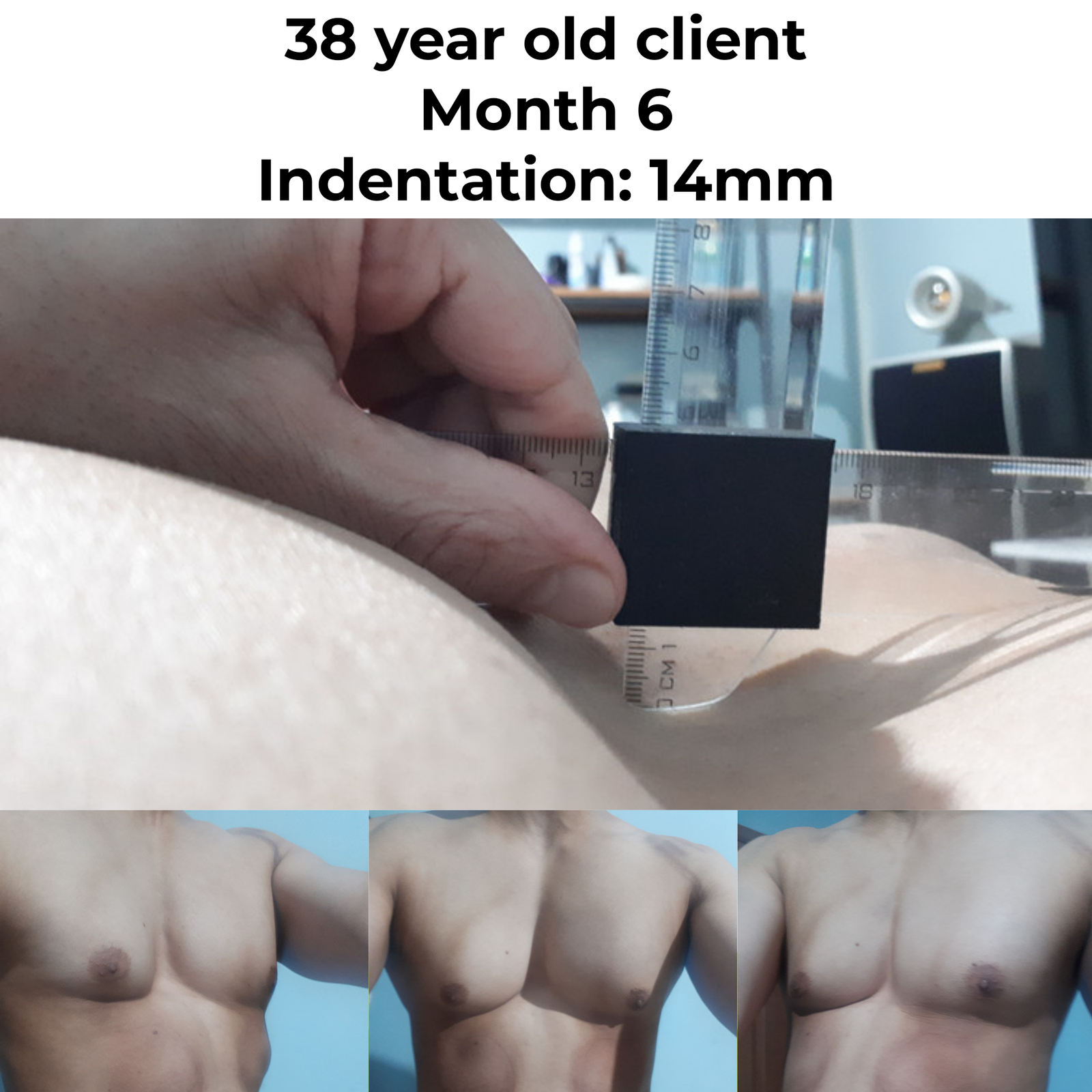
His journey hasn’t been a perfectly straight line. Progress was stubborn at first, only moving from 33mm to 30mm in the first month, but then it completely took off, dropping rapidly to 21mm the following month. Unfortunately, between months 3 and 6, personal matters prevented him from using the devices consistently, and no progress photos were taken. Remarkably, even with very low intensity, his chest still improved from 21mm to 14mm during this period.
From month 6 onwards, the progress has been slower but very steady (14mm, then 13mm, 11mm, 9mm, and currently 8mm). He isn’t obsessively intense about the program, but his balanced, consistent effort continues to yield continuous results.
While the structural changes are harder to achieve at this final stage, the internal benefits are massive. He breathes much easier, his ribs no longer press against his heart, and his overall quality of life has improved drastically.
His journey isn’t over yet, and we won’t stop until he is completely healed, but his progress so far is extremely promising.
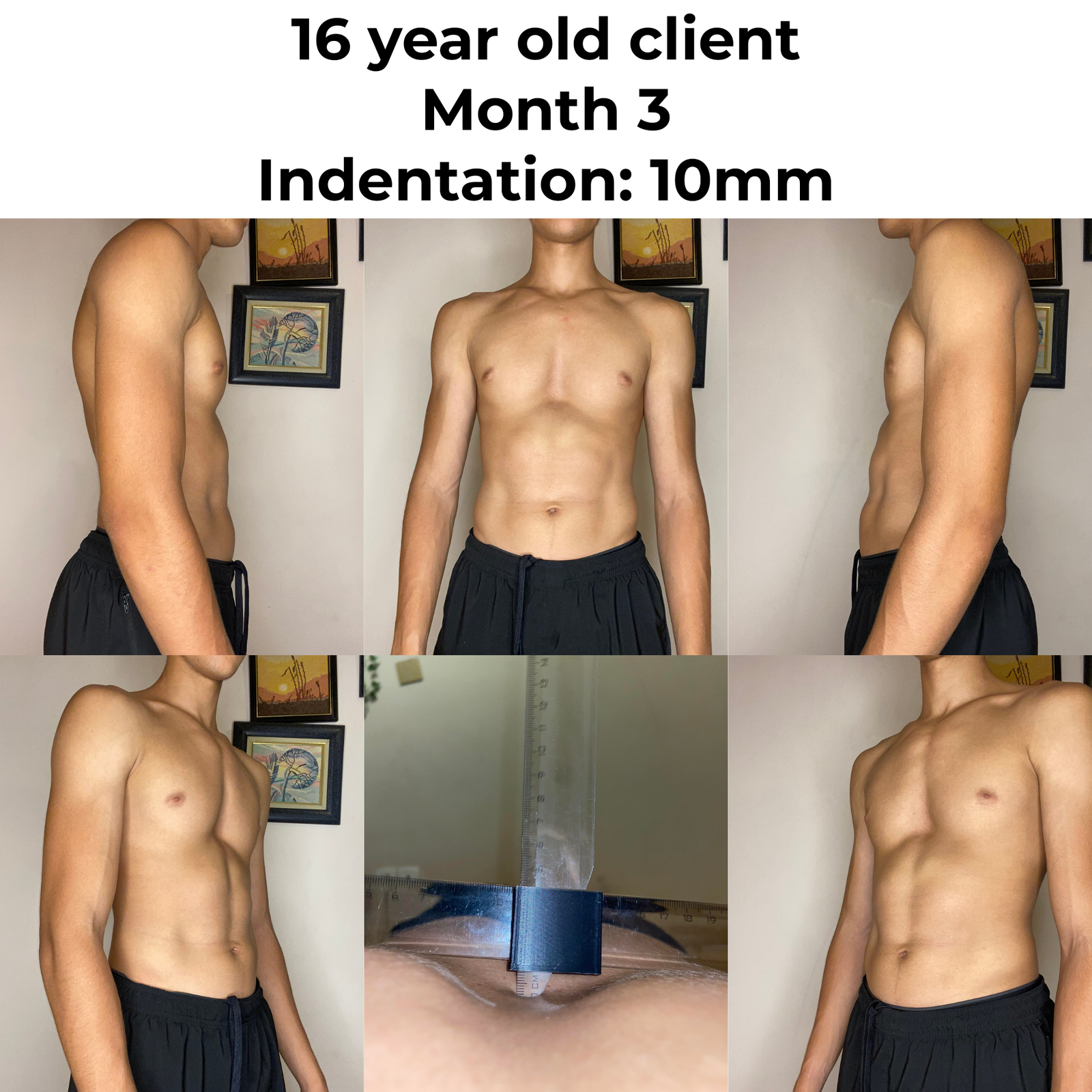
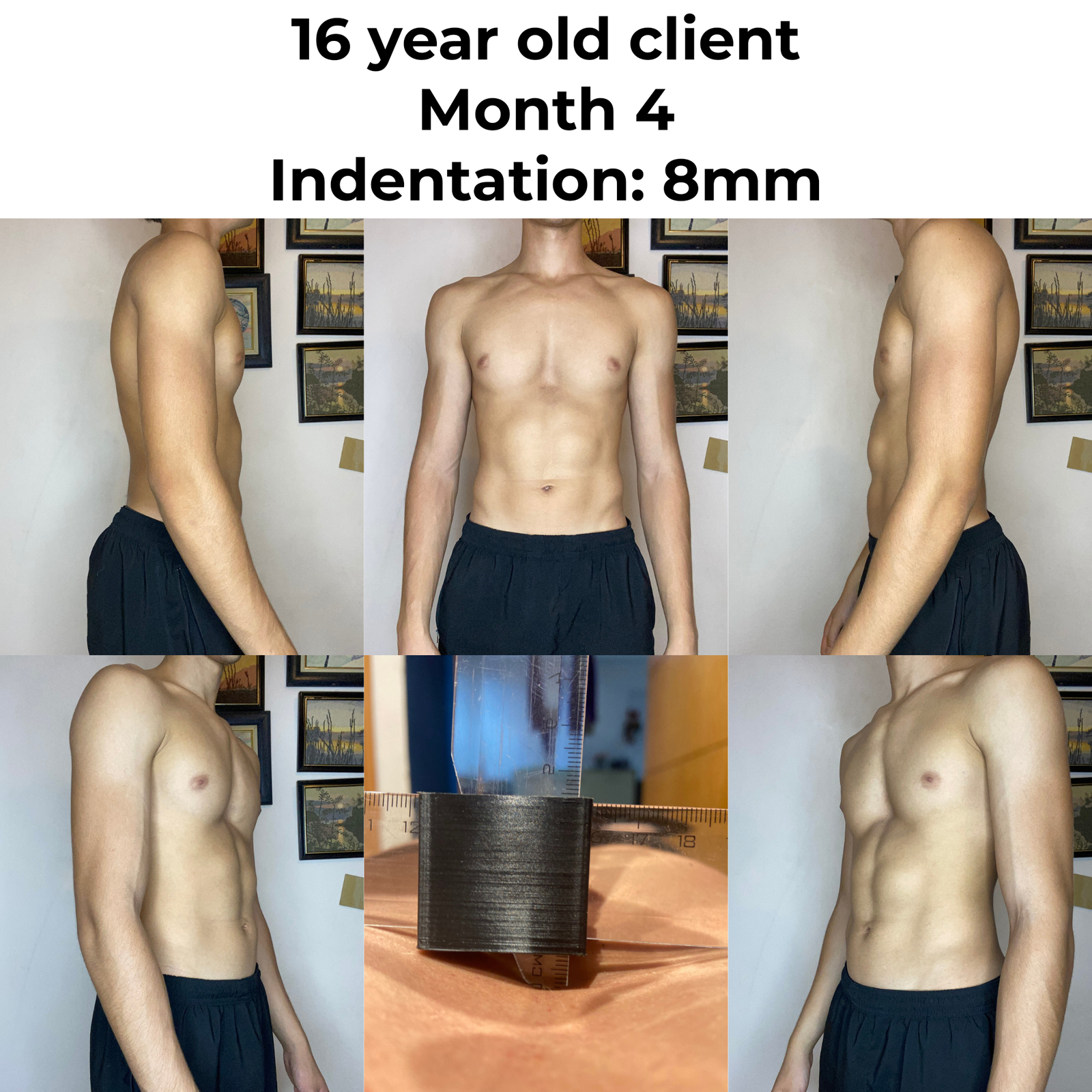
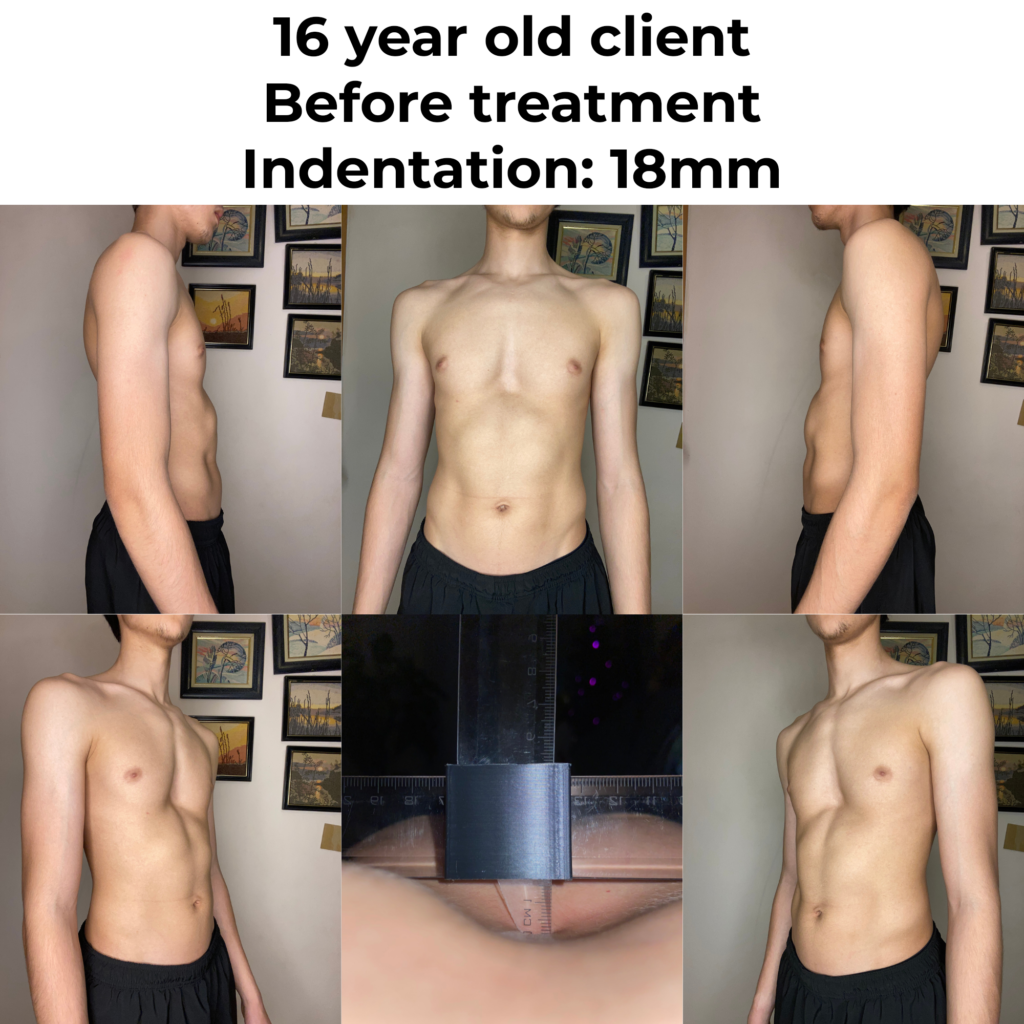
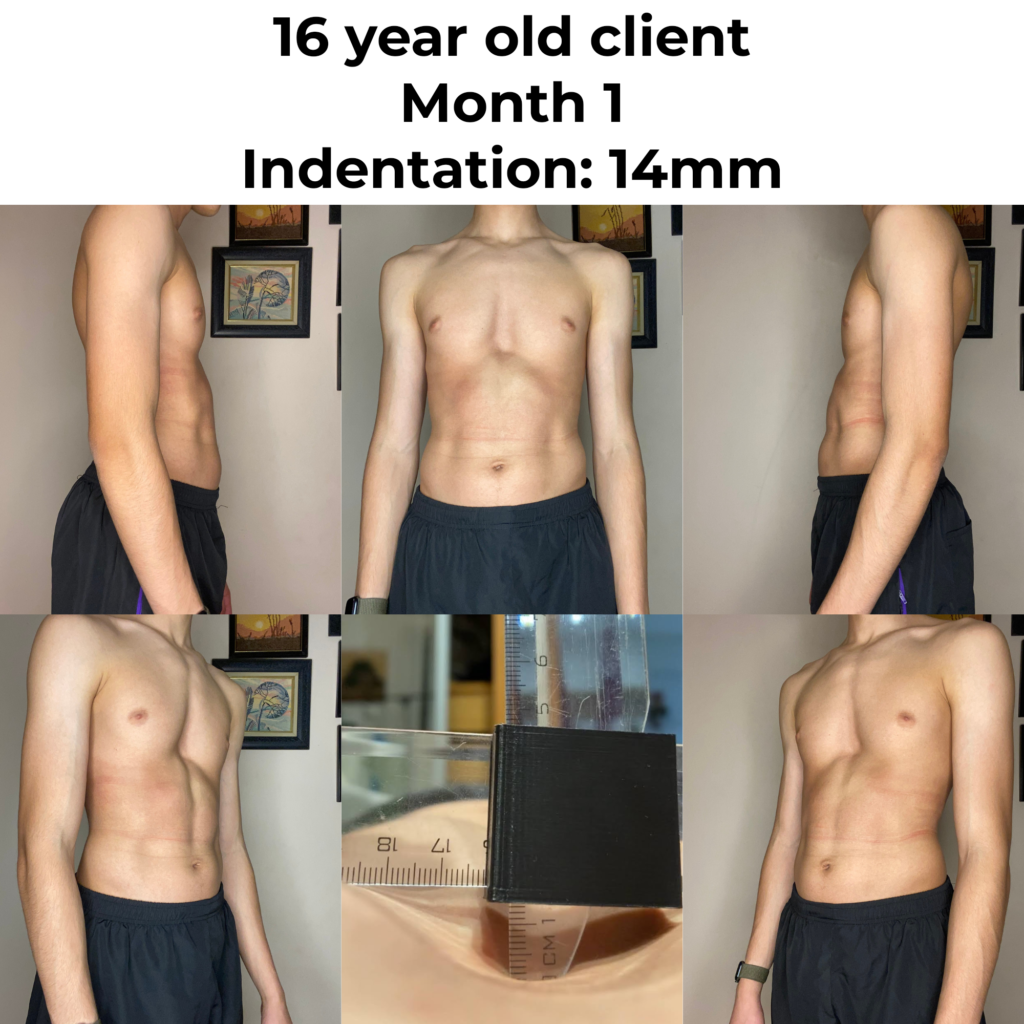
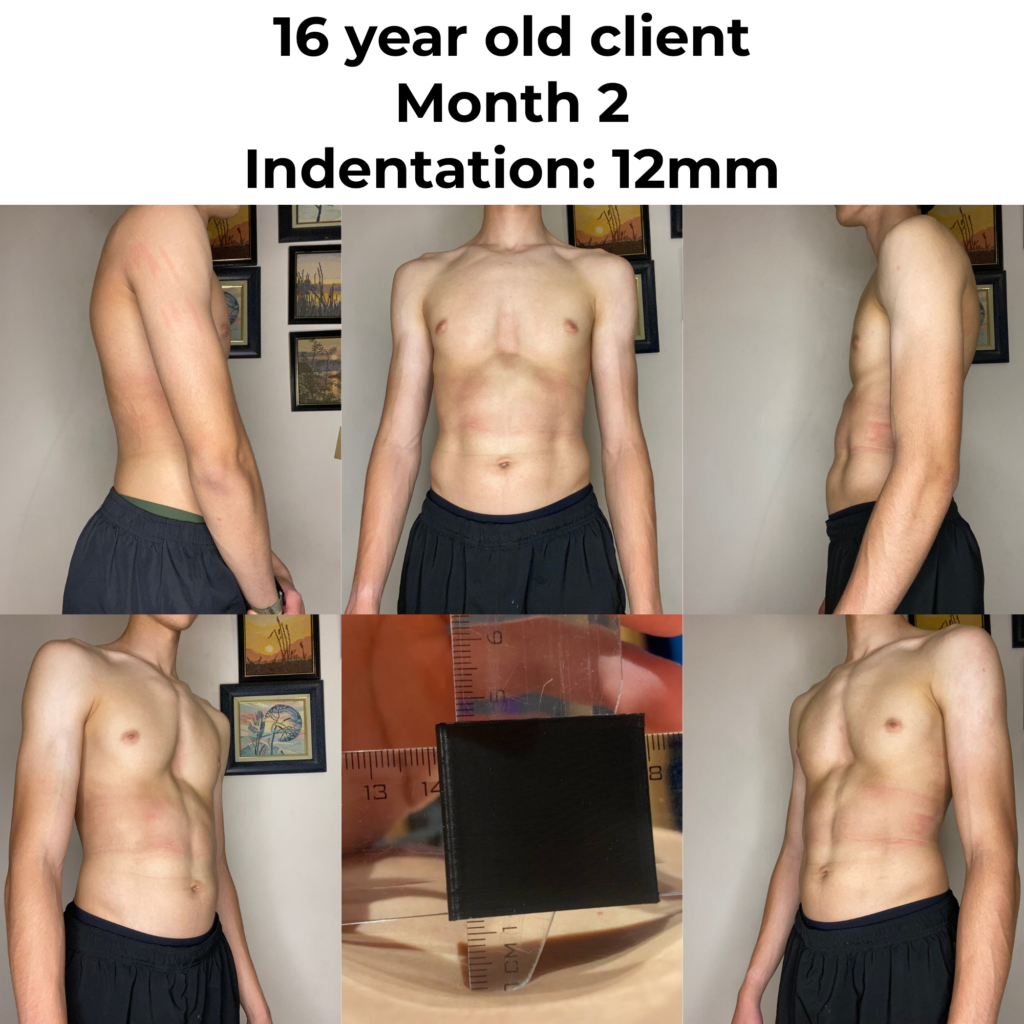
Mr. D. — 16-Year-Old Client with Moderate Pectus Excavatum (18 mm Indentation)
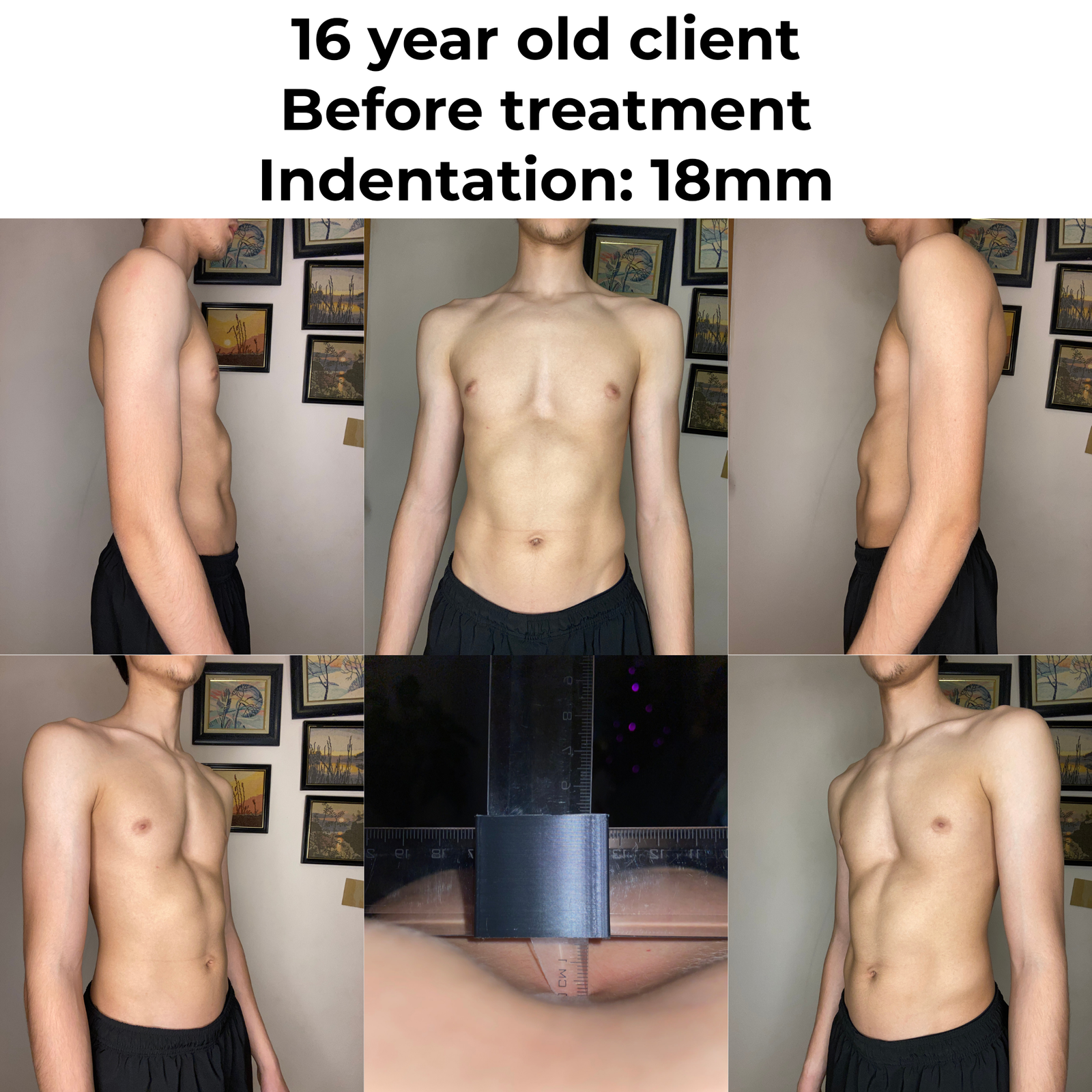
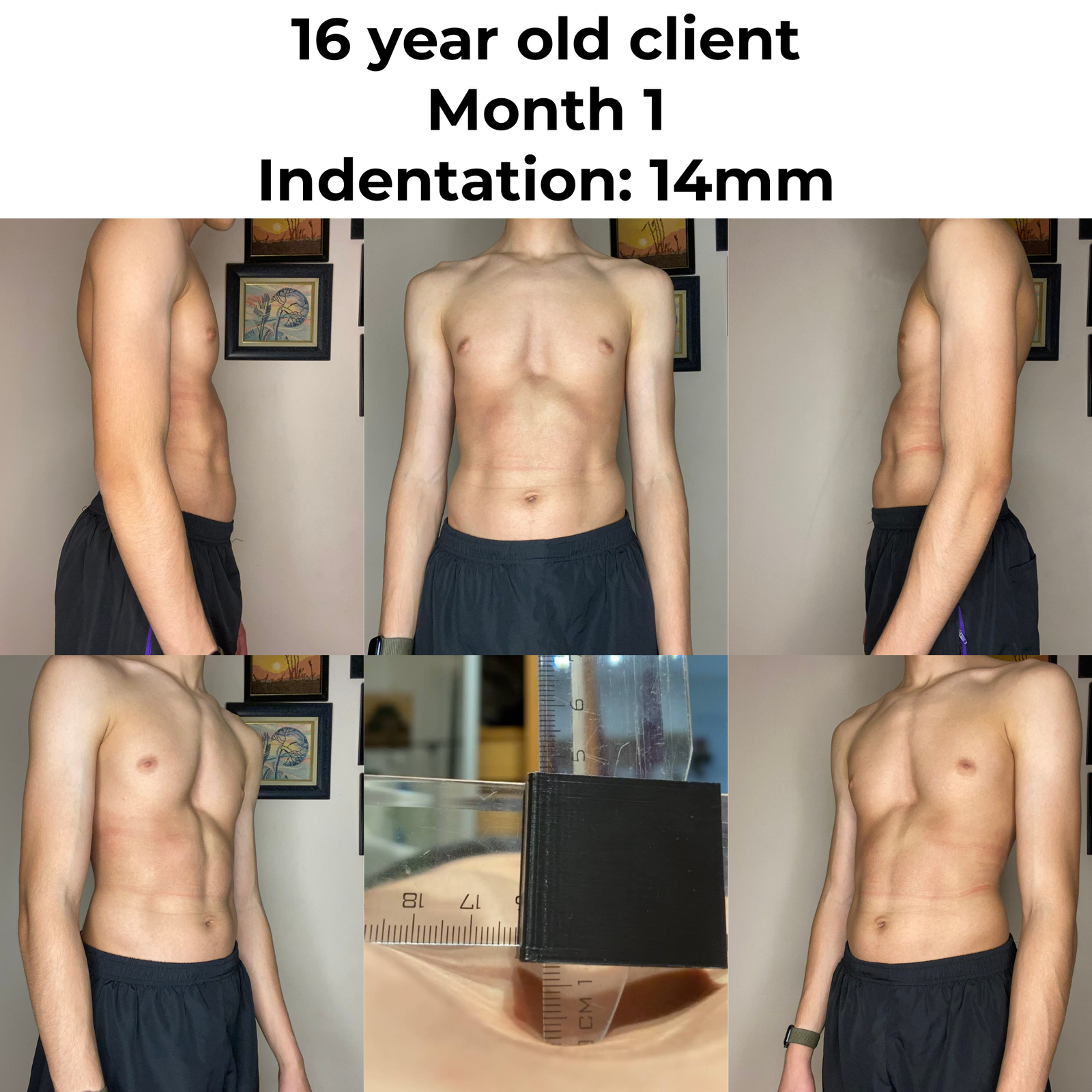
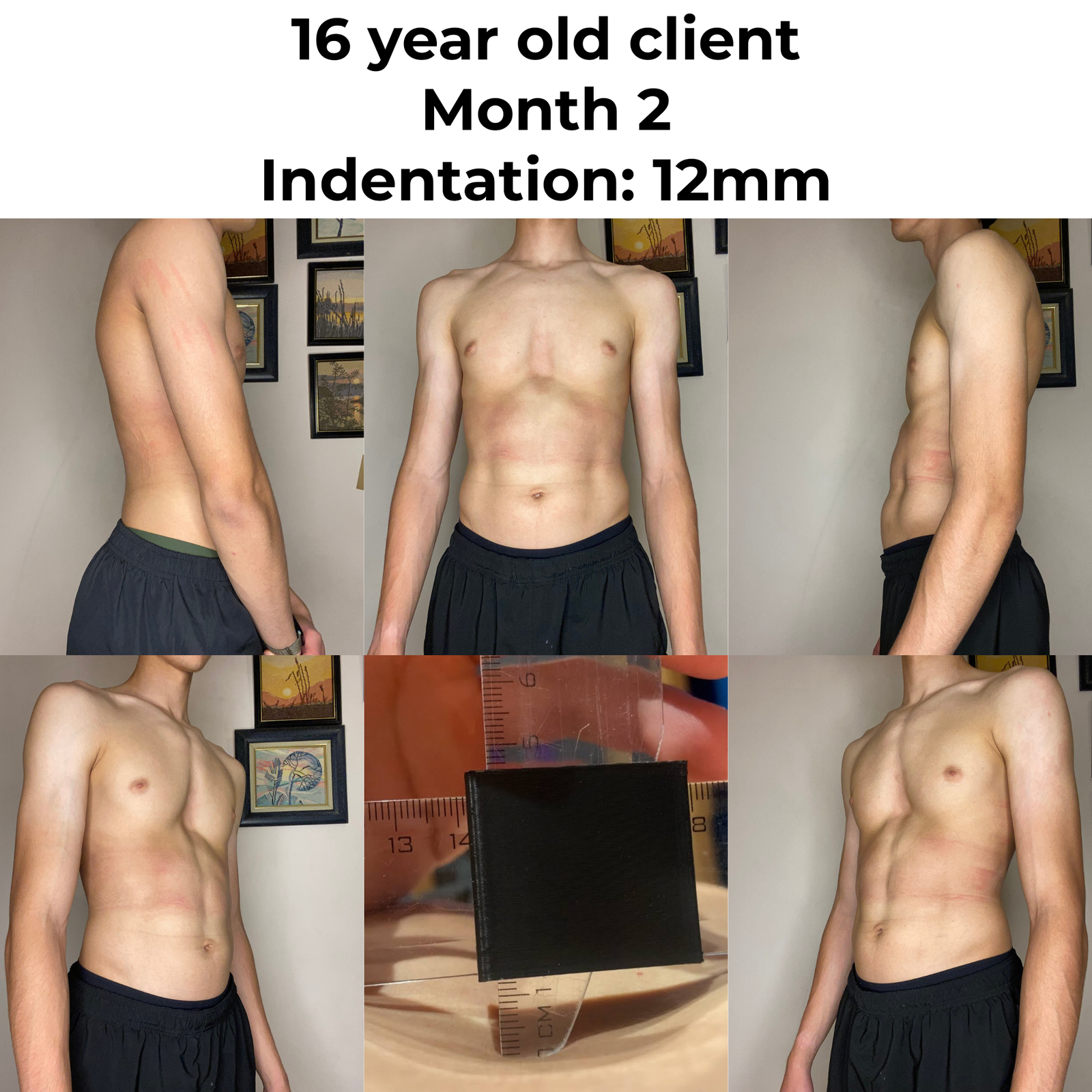
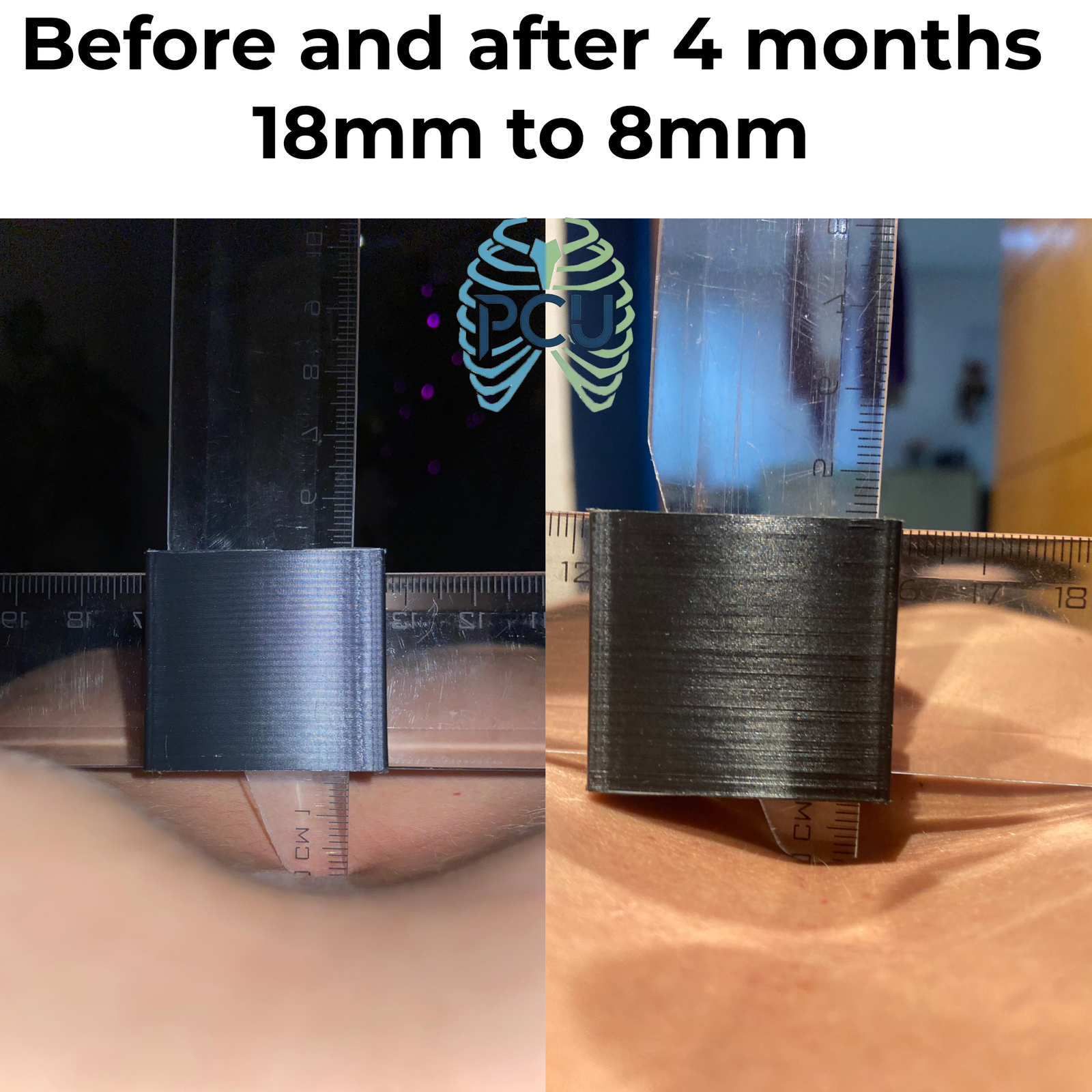
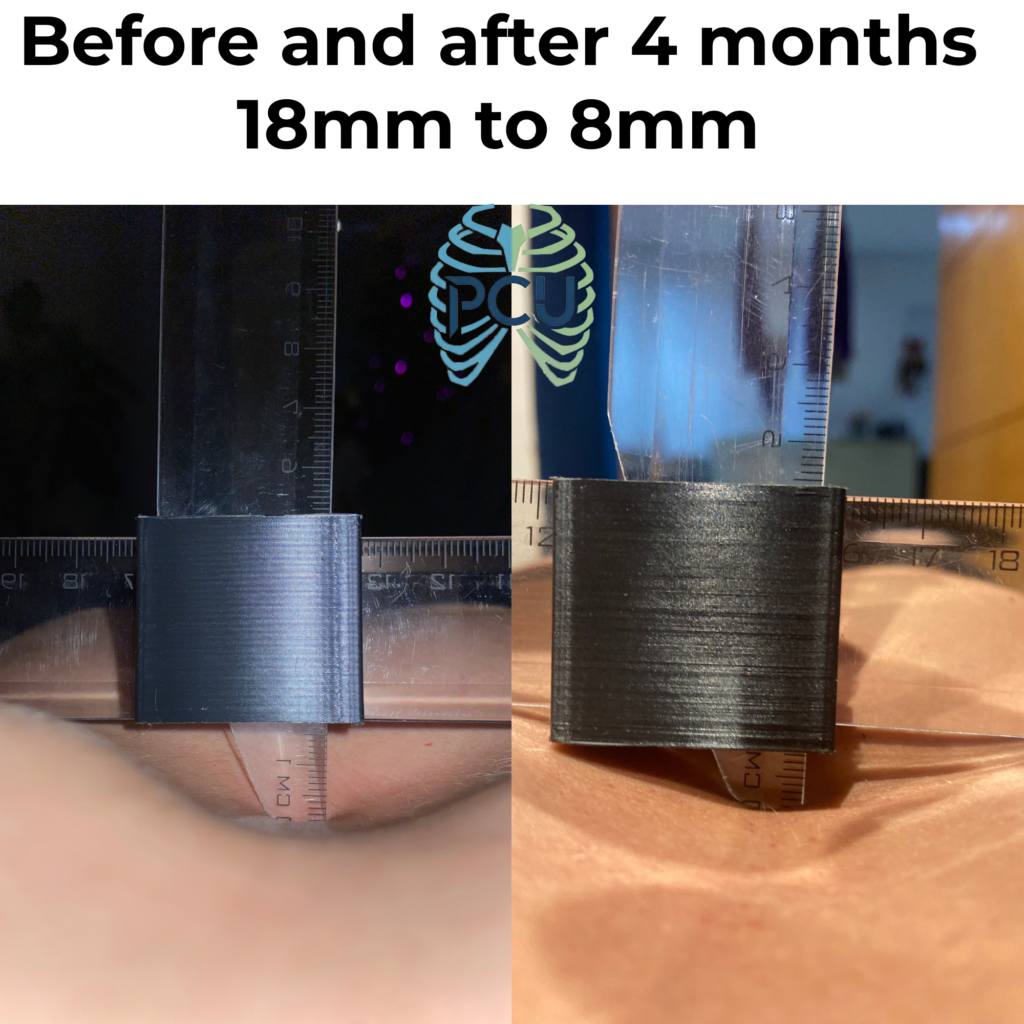
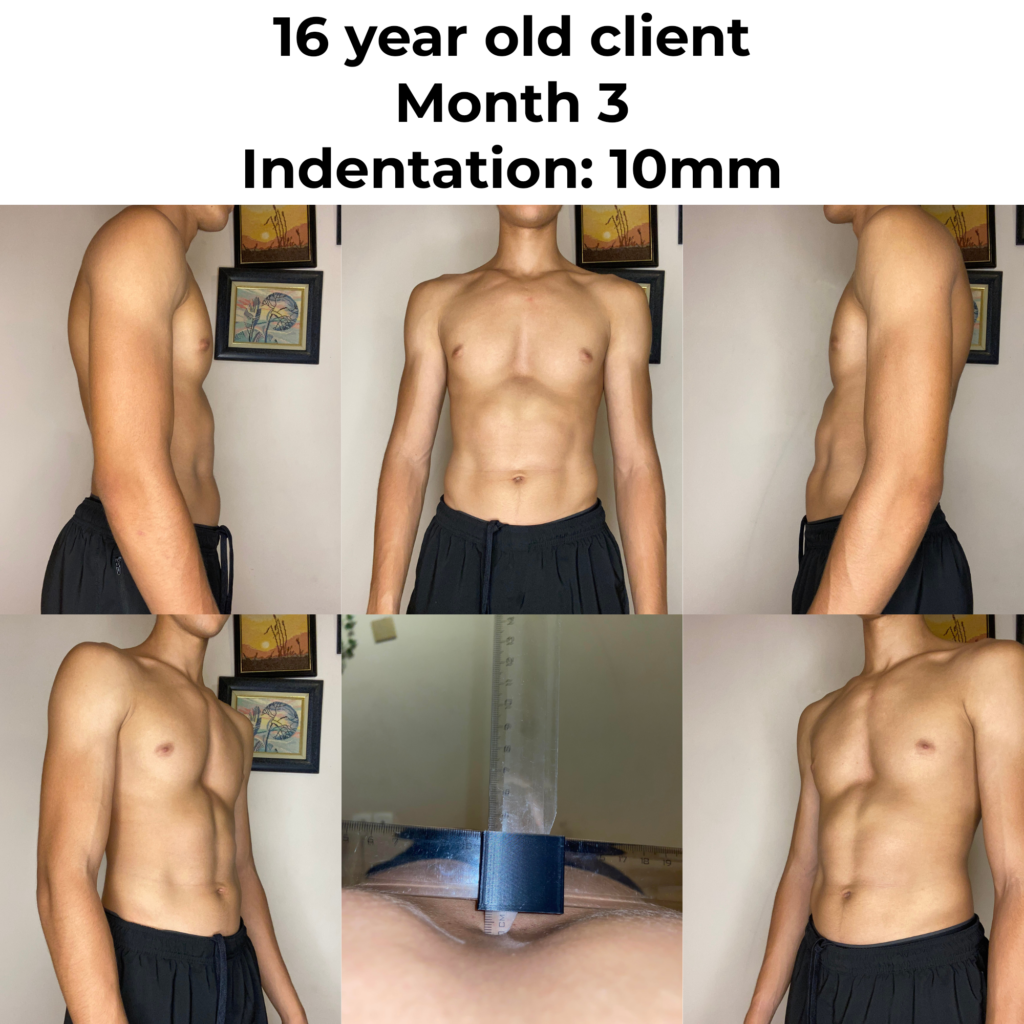
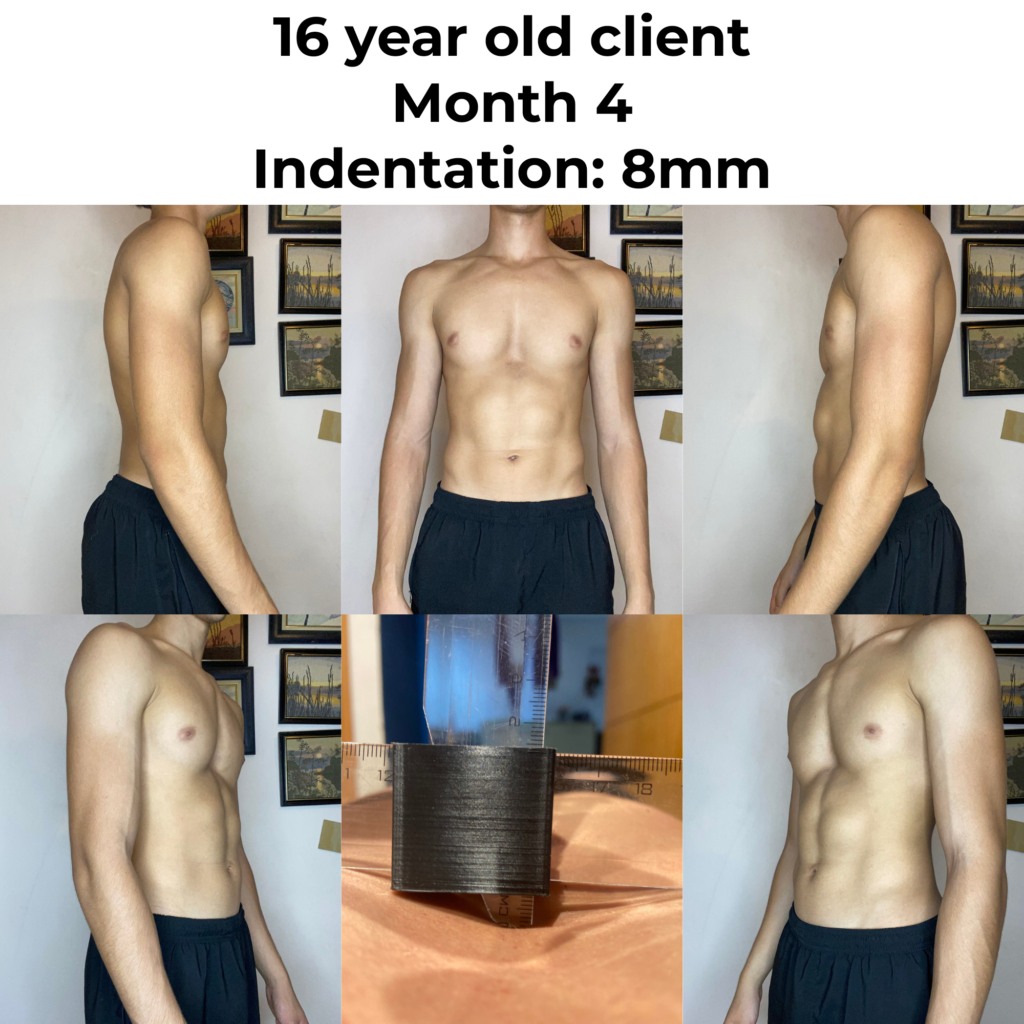
16-year-old Mr. D. started his journey with moderate Pectus Excavatum and an 18mm indentation. In just 4 months, his chest improved from 18mm to 8mm—a fantastic 55% reduction.
What makes his case particularly interesting is his approach. He is perhaps the most laid-back client I have ever had. Despite being equipped with both custom braces and a vacuum bell, he took weekends completely off. On weekdays, he didn’t wear the devices to school or during his regular sports activities, opting to only use them while at home. Furthermore, the specialized training program was kept to a bare minimum, roughly once a week.
The fact that he achieved such significant changes with minimal effort is entirely thanks to his young age and the high flexibility of his chest wall. His progress has been incredibly consistent, steadily dropping from an initial 18mm down to 14mm in the first month, 12mm in the second, 10mm in the third, and 8mm by month four.
I firmly believe that if he had strictly followed the prescribed protocol, he would already be fully healed today with a 0mm indentation. But that’s perfectly fine—slow and steady wins the race. It might take a little longer, but the time will come when his chest is completely healed.
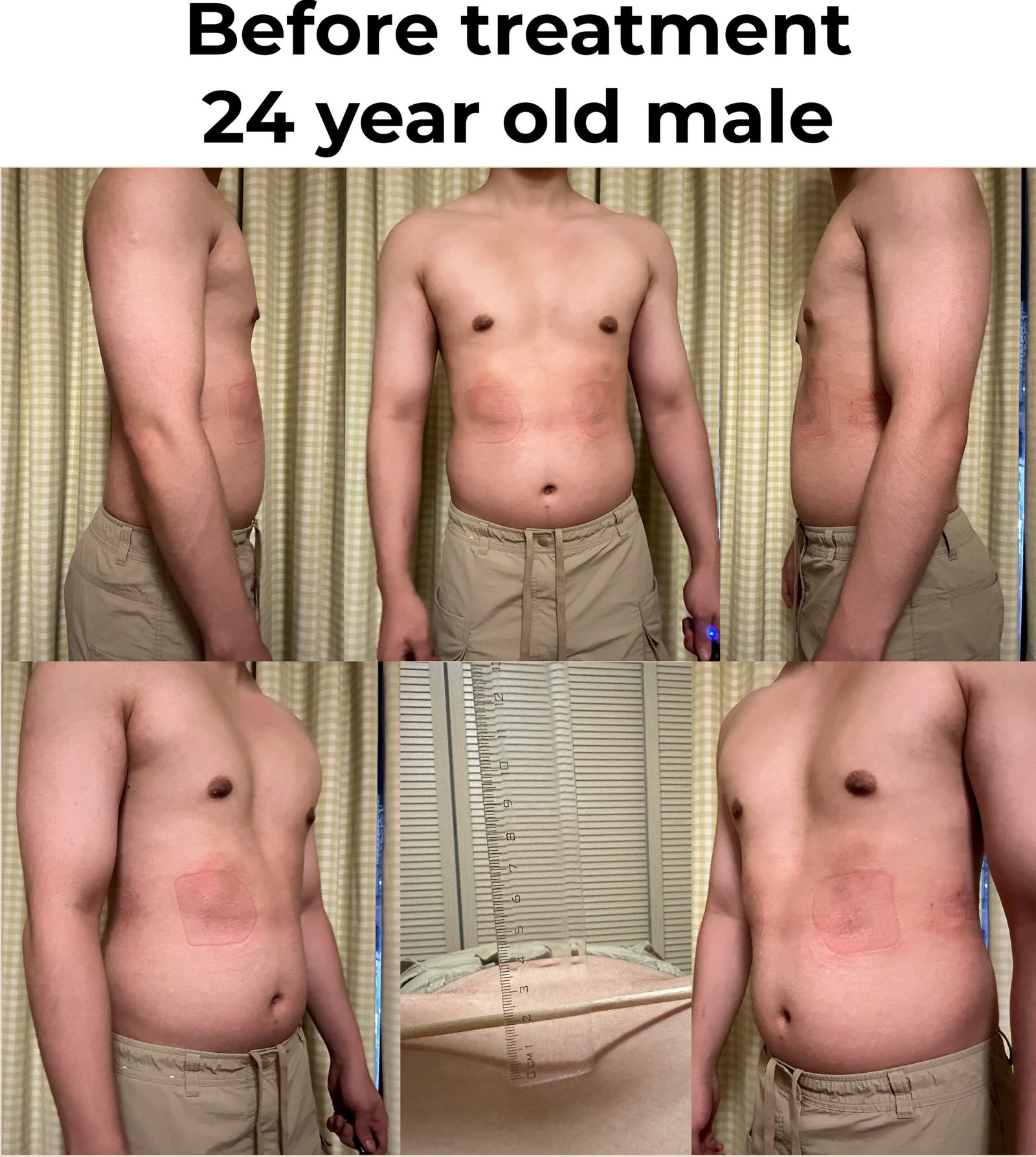
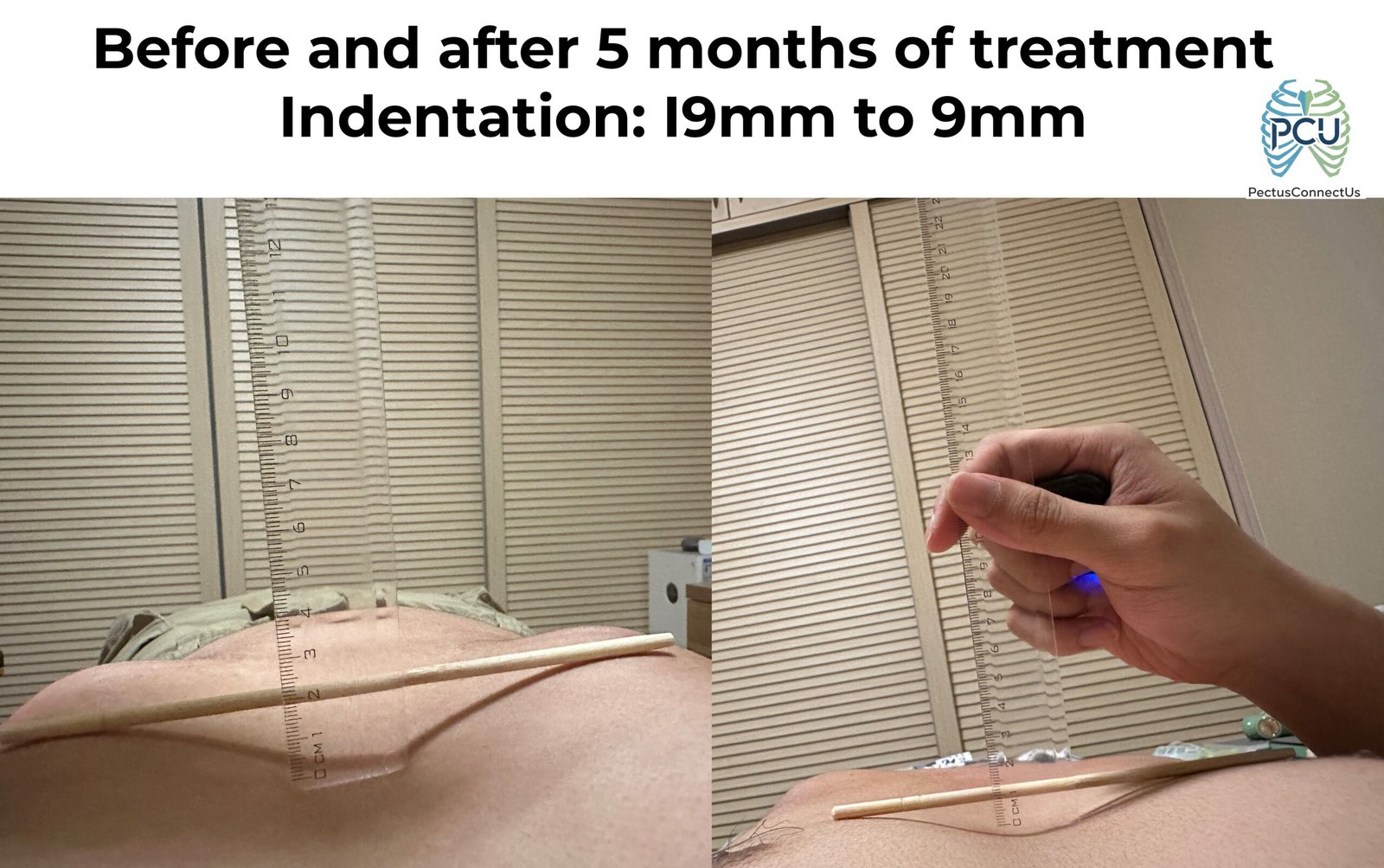
Mr. C. — 24-Year-Old Client with Moderate Pectus Excavatum (19 mm Indentation)
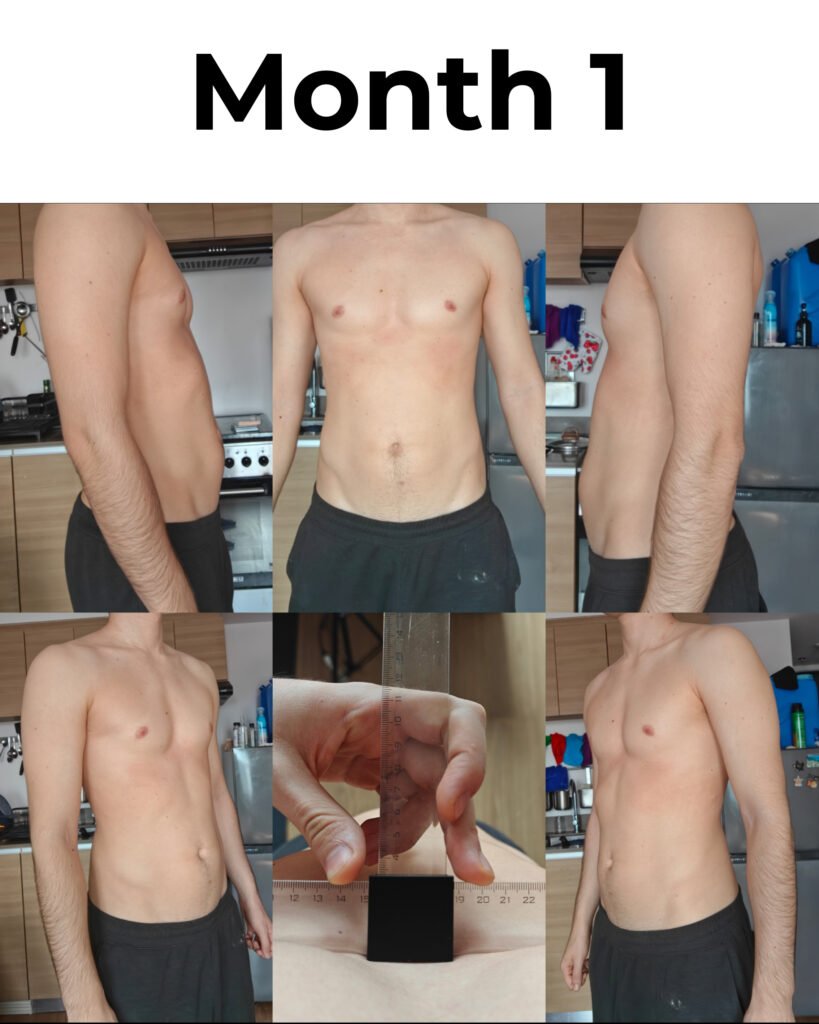
Mr. C began his treatment with a moderate 19mm indentation and a pronounced potbelly.
In just 5 months, his indentation improved from 19mm to 9mm—an impressive 53% reduction.
Although he wore the braces consistently throughout the day, he didn’t strictly follow the training program. Even so, both his indentation and rib flare improved significantly, and his potbelly completely disappeared.
His journey isn’t over yet, but his progress so far is extremely promising.